Notes from the shop · Brand Activations
Wrapped Vehicles for Brand Activations: What Works On Site
How activation teams use wrapped vans, step vans and novelty trucks as set pieces: vehicle choice, design for photography, timelines, NYC load-in and removal.
· 9 min read · NYC Car Wraps, Long Island City
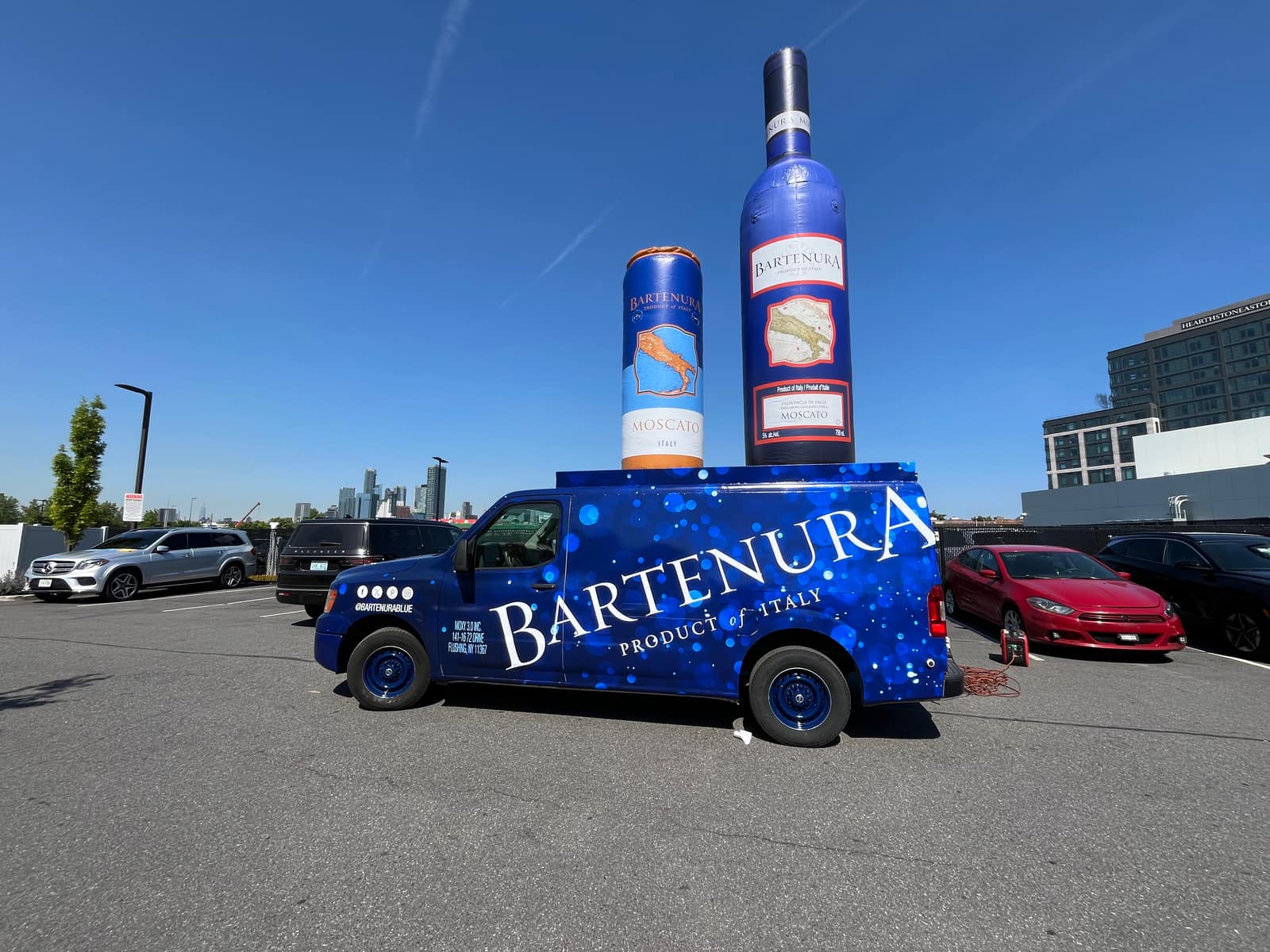
A good share of the vehicles that come through our bay in Long Island City are not fleet vehicles. They are set pieces. A brand manager or an agency producer has a date, a venue and a campaign look, and needs a vehicle that carries that look into a parking lot, a street fair or a store front, holds still for a day of photos, and leaves. This post covers what makes those vehicles work on site, and what to send us so the timeline holds.
Why put the brand on a vehicle at all
Most of an activation build has to be assembled on site: tents, counters, inflatables, signage, sampling stations. A wrapped vehicle arrives finished. It parks where the site plan says, becomes the largest branded surface in the footprint, and is the thing people stand in front of for a photo. At the end of the run it drives away and the space is clear. It works in a plaza lot where nothing permanent can be built, at a street fair where the footprint is one parking lane, and in front of a store where the sidewalk is the stage. It is also the one part of the build that can move to the next stop.
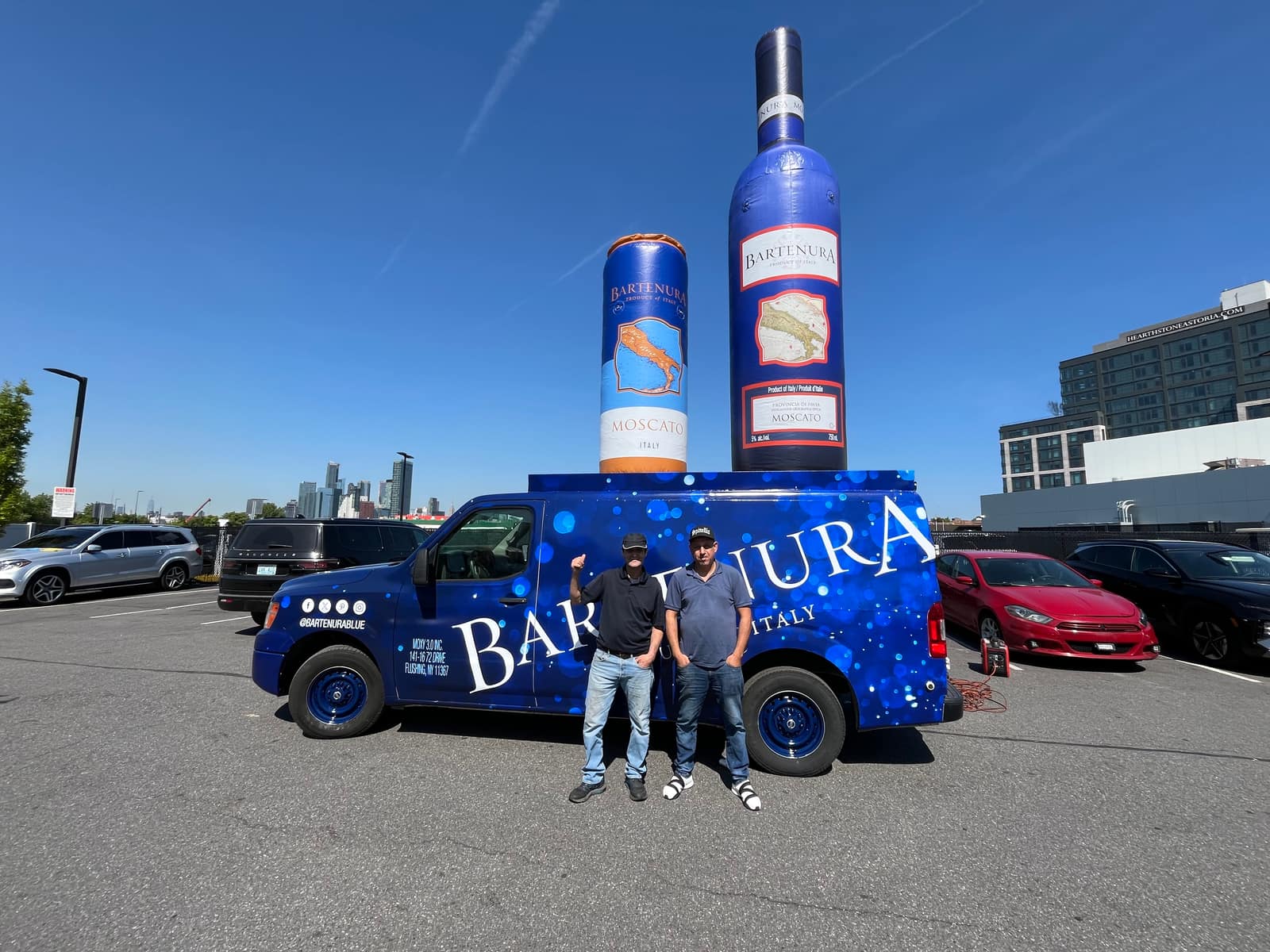
A campaign wrap is not a fleet wrap
The vehicles look similar on the lift. The job is different. A fleet wrap is built to last for years: cast film with a long-life UV laminate, restrained art that survives a thousand car washes, contact details that cannot go out of date. A campaign wrap is built for a run, and that changes four things.
- Run length. A weekend, a month or a summer tour. Film and laminate are chosen for clean removal at the end, not for maximum outdoor life.
- Bolder art. The whole body can be one color, one illustration or one photograph. A busy street fair rewards that.
- Removable films. We spec media that comes off factory paint in one pass and leaves the vehicle ready for the next campaign or for return to the rental company.
- A fixed date. Fleet work is scheduled around vehicle downtime. Activation work is scheduled around the event, and the event does not move.
The last point drives everything else. On a fleet job, a proof revision that slips a week is an inconvenience. On an activation, it can push the install past load-in.
Choosing the vehicle
The vehicle is the canvas, so pick it for what it gives the design and the site.
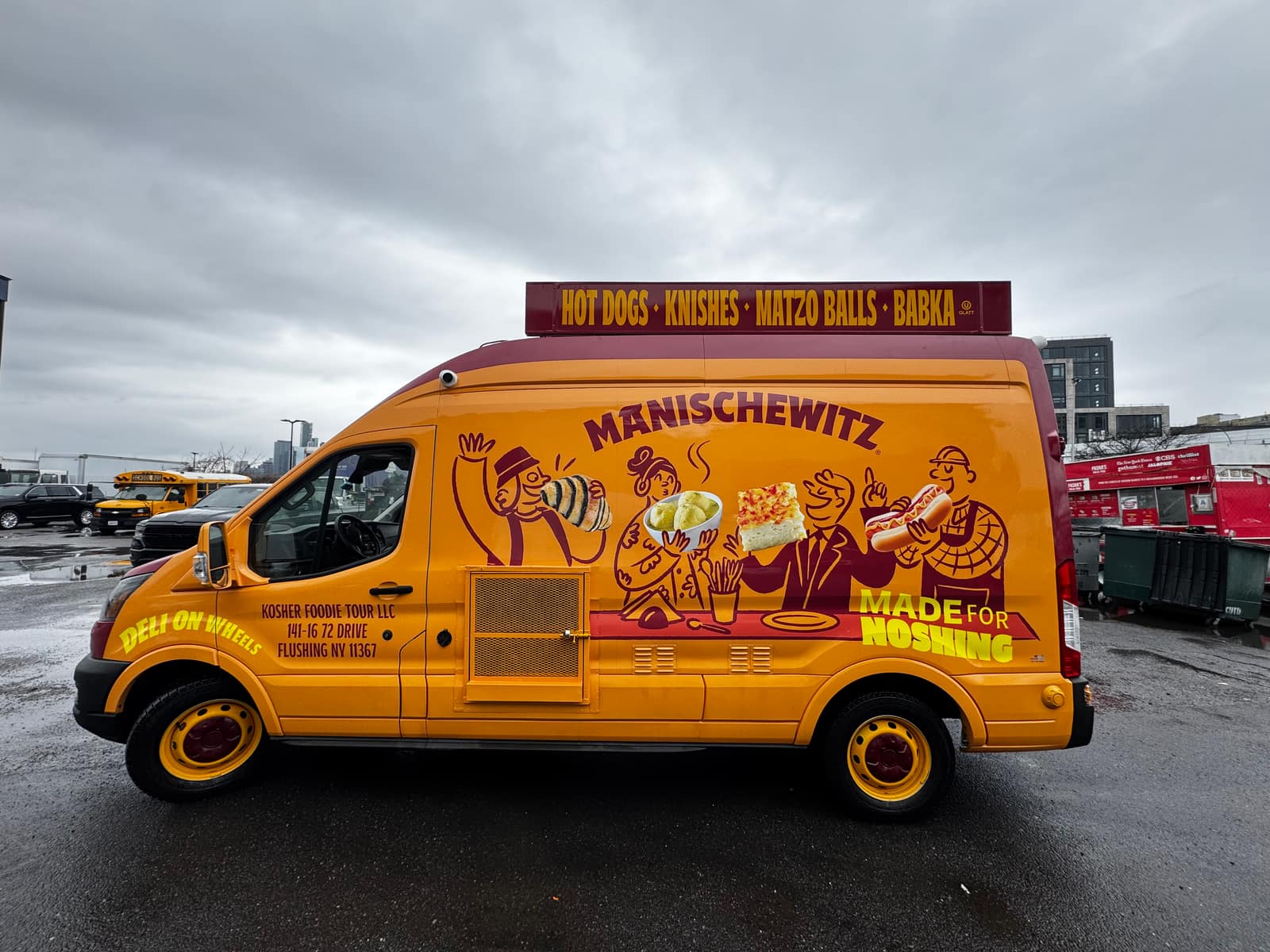
- Cargo van (NV, Transit, Sprinter, ProMaster). Tall, mostly flat sides and a big rear. Easy to rent and easy to park in a standard space. The most common activation vehicle for a reason.
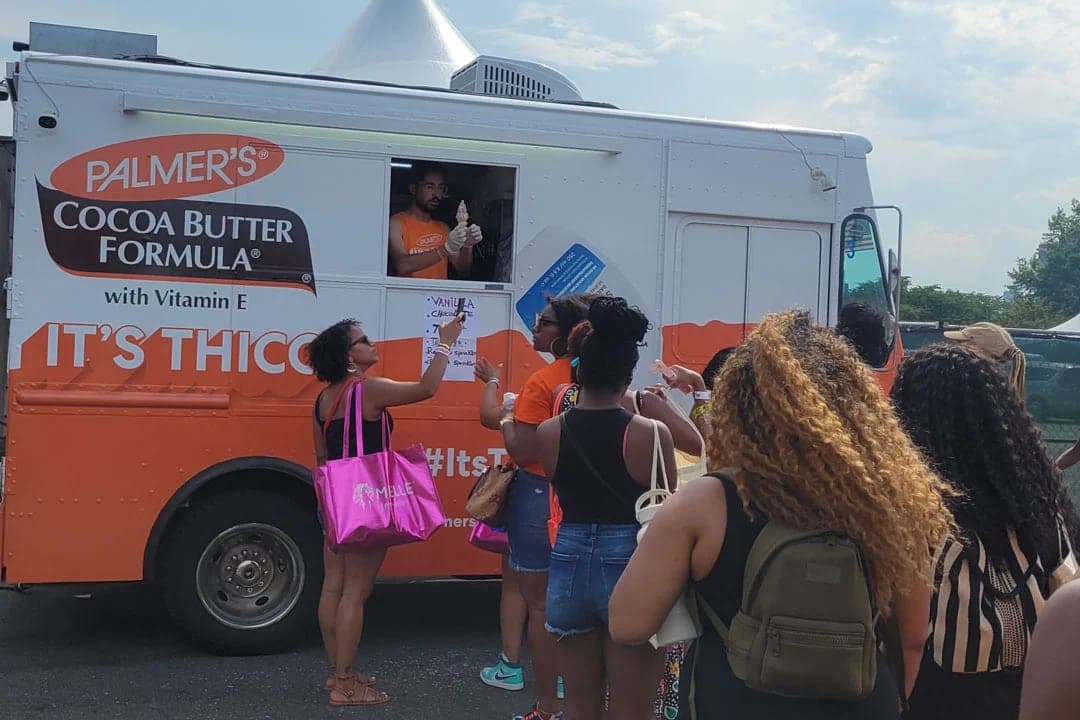
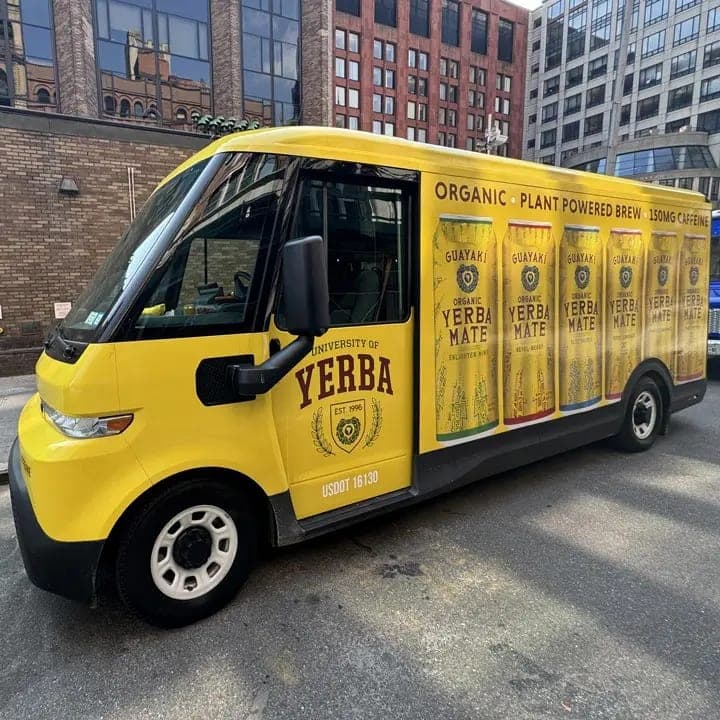
- Step van. The tallest flat panels of anything that fits in a normal lot. The box sides take one large image uninterrupted, and the interior can open up as a walk-through or a serving window.
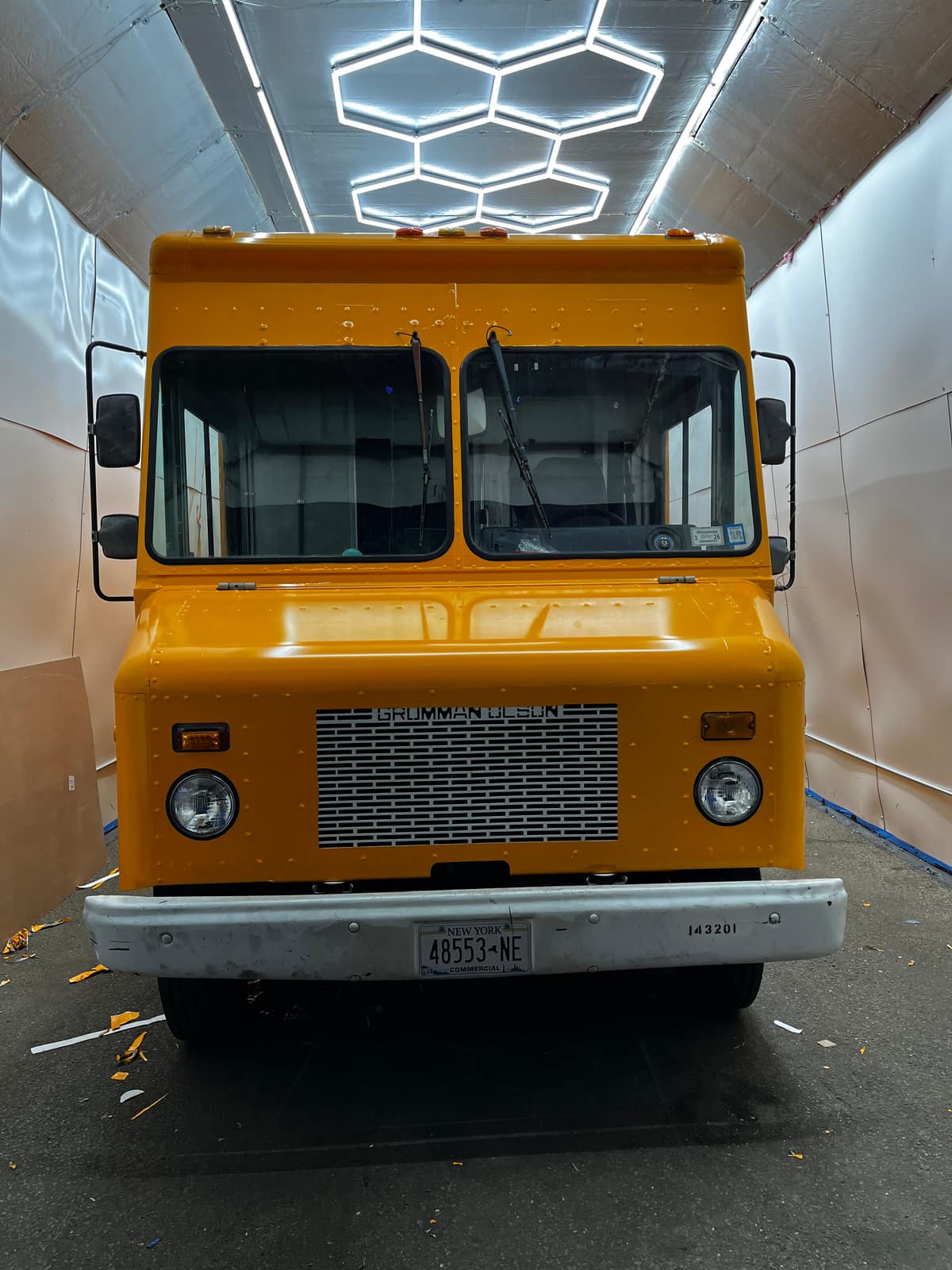
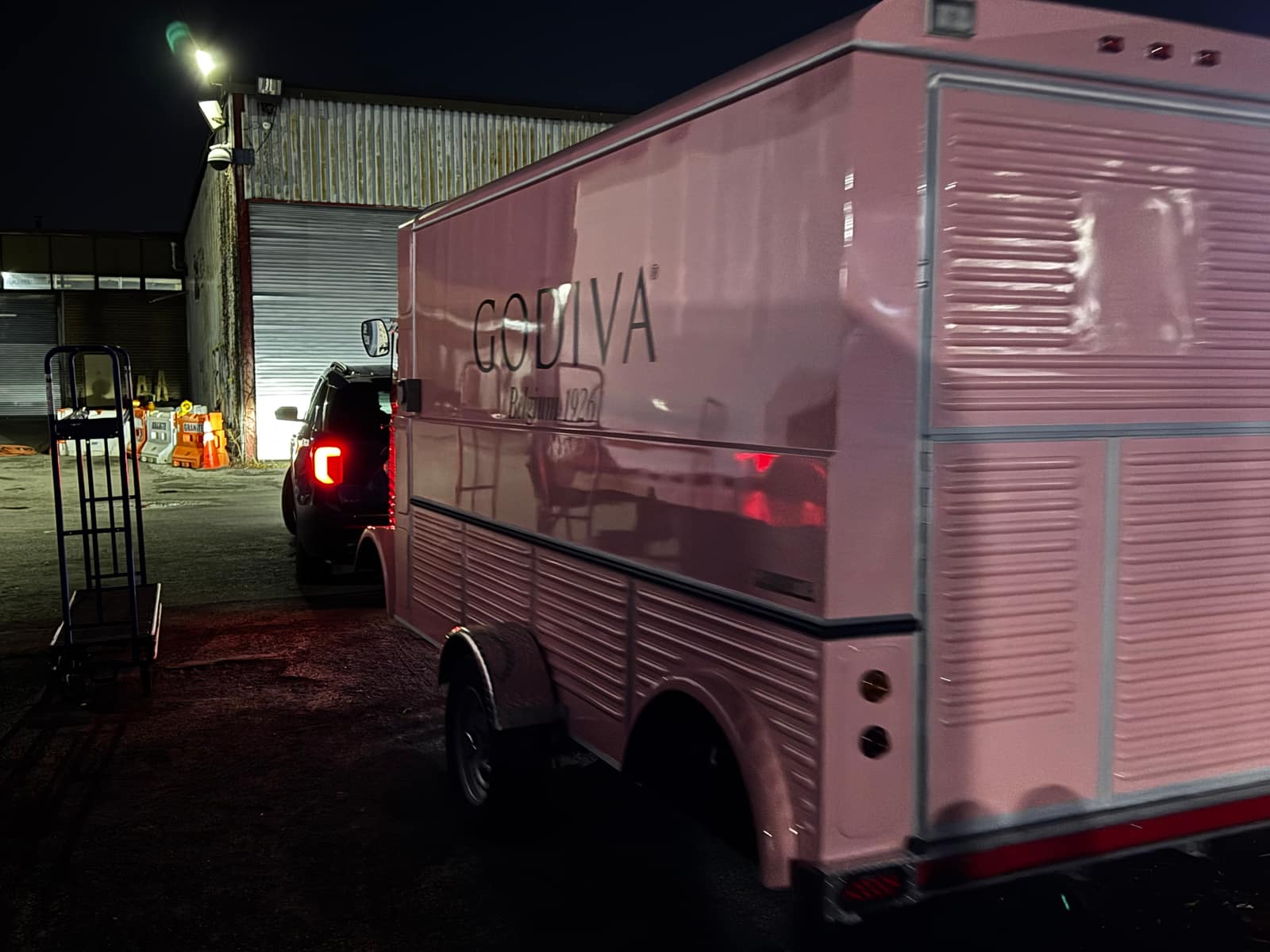
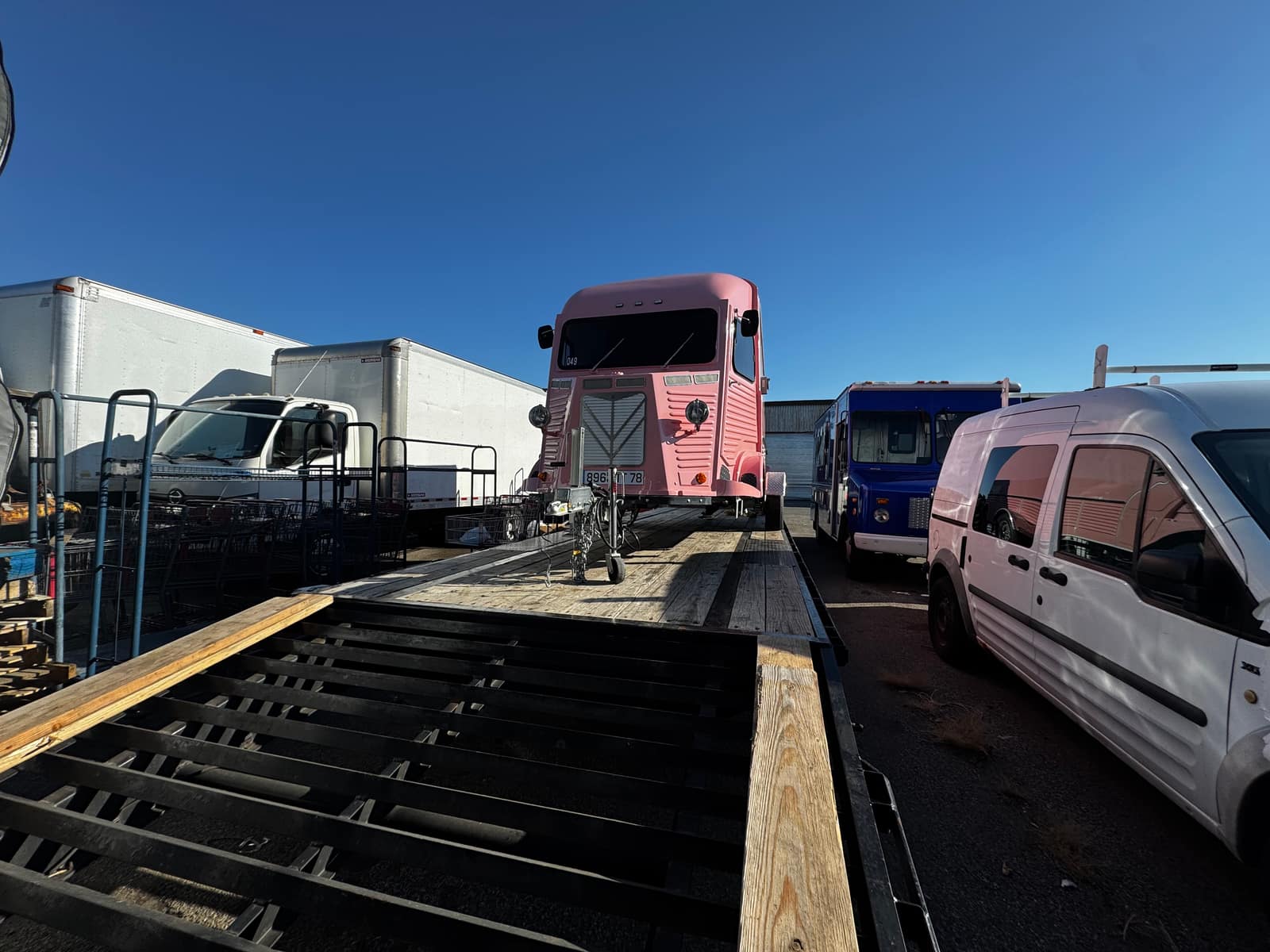
- Vintage or novelty truck. Brings its own character before any film goes on. Curved fenders and rounded cabs take more install time, and it usually travels to site on a trailer.
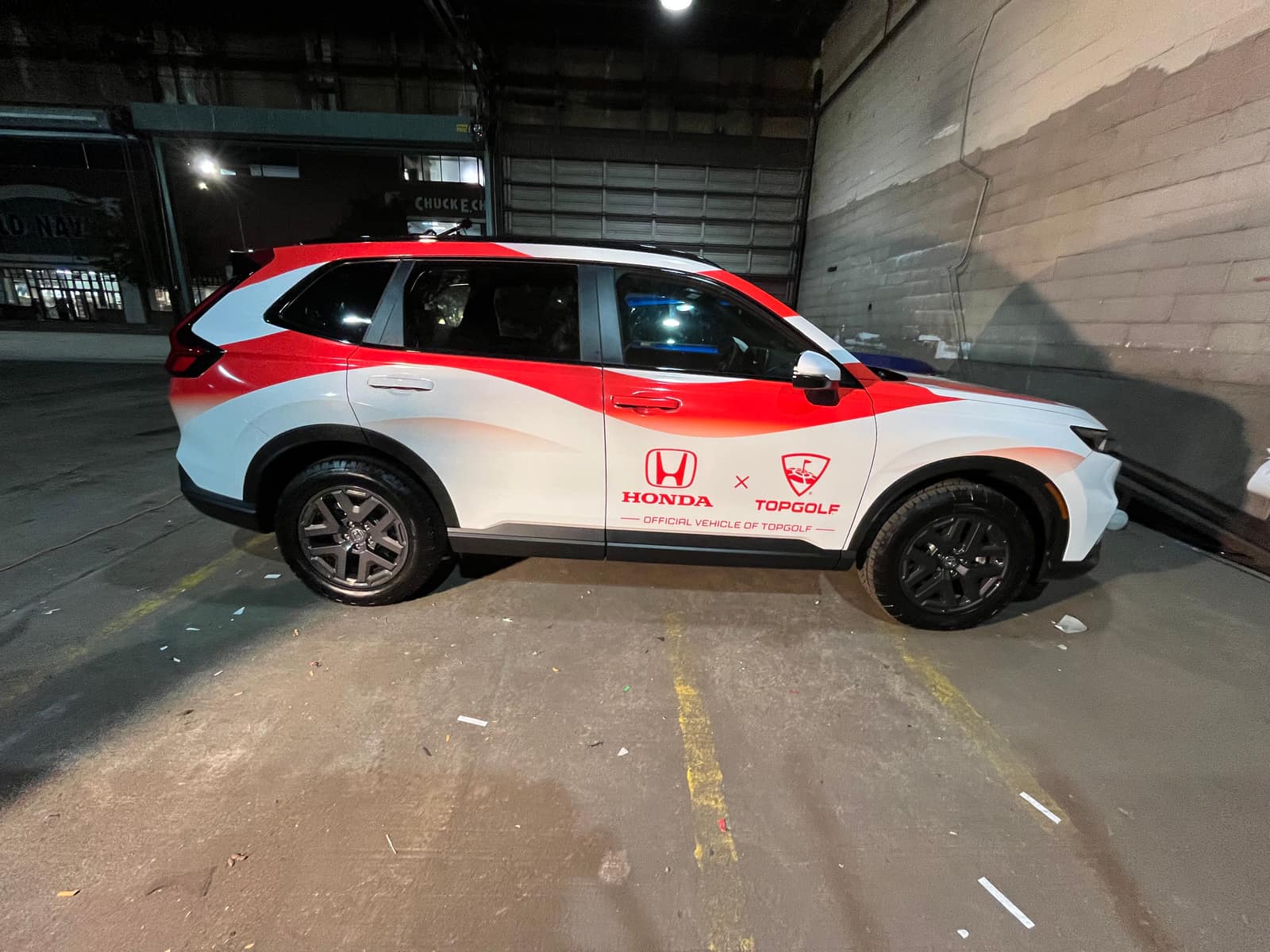
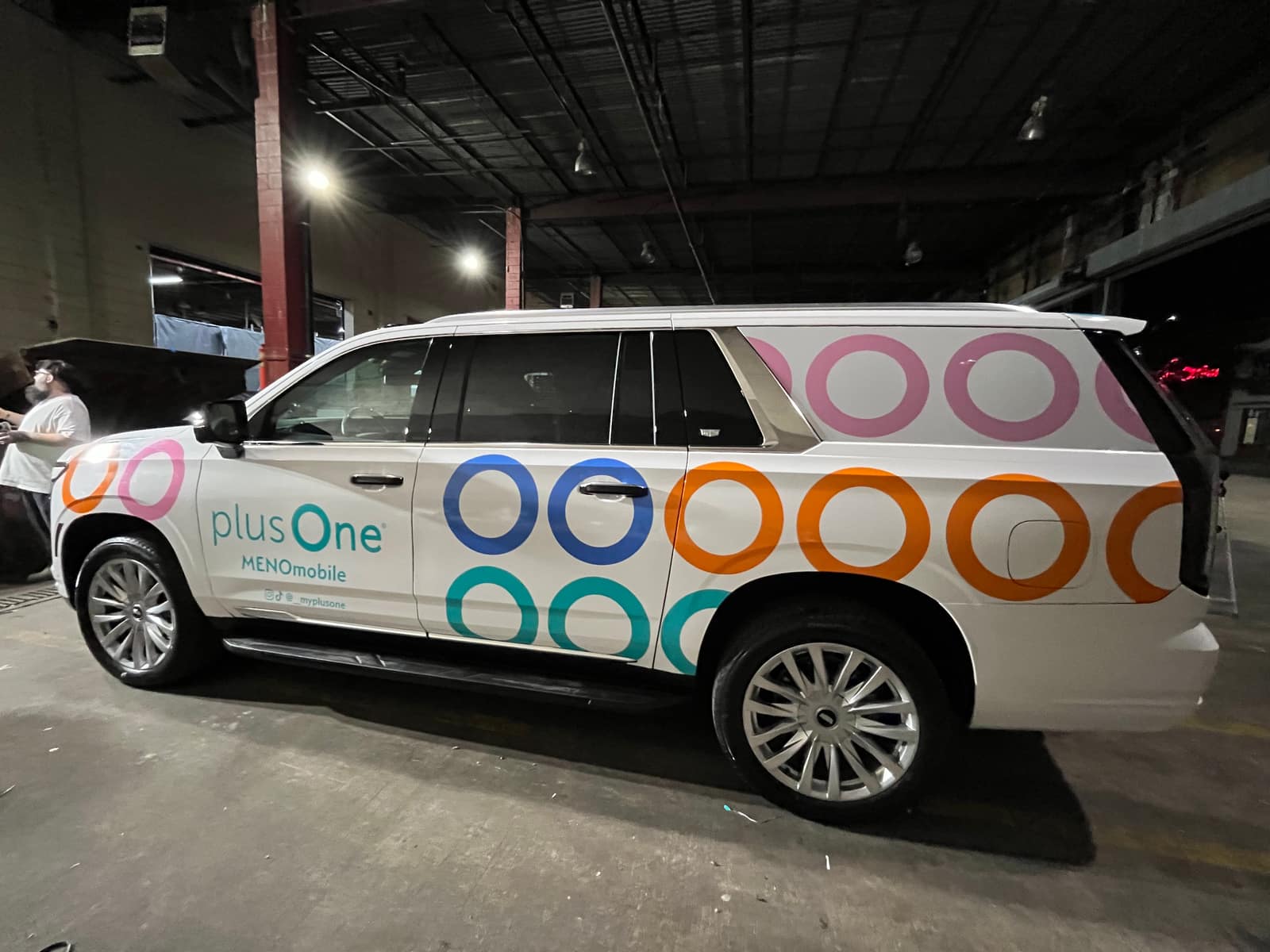
- SUV. Lower and more sculpted than a van, with more doors, handles and trim to design around. Suits a campaign tied to a vehicle model, or an activation on a course or a valet lane.
- Pickup. An open bed that can carry product or a build-out, and a cab that takes a logo cleanly. Less side area than a van.
.jpeg&w=3840&q=75&dpl=dpl_22Enq92PMaeSFTL5E19rqqKCtY9p)
Design for the camera, not the highway
A fleet wrap is read at 30 feet by someone driving past. An activation wrap is read at 6 feet by someone holding a phone, and then by everyone who sees that photo. That changes the brief.
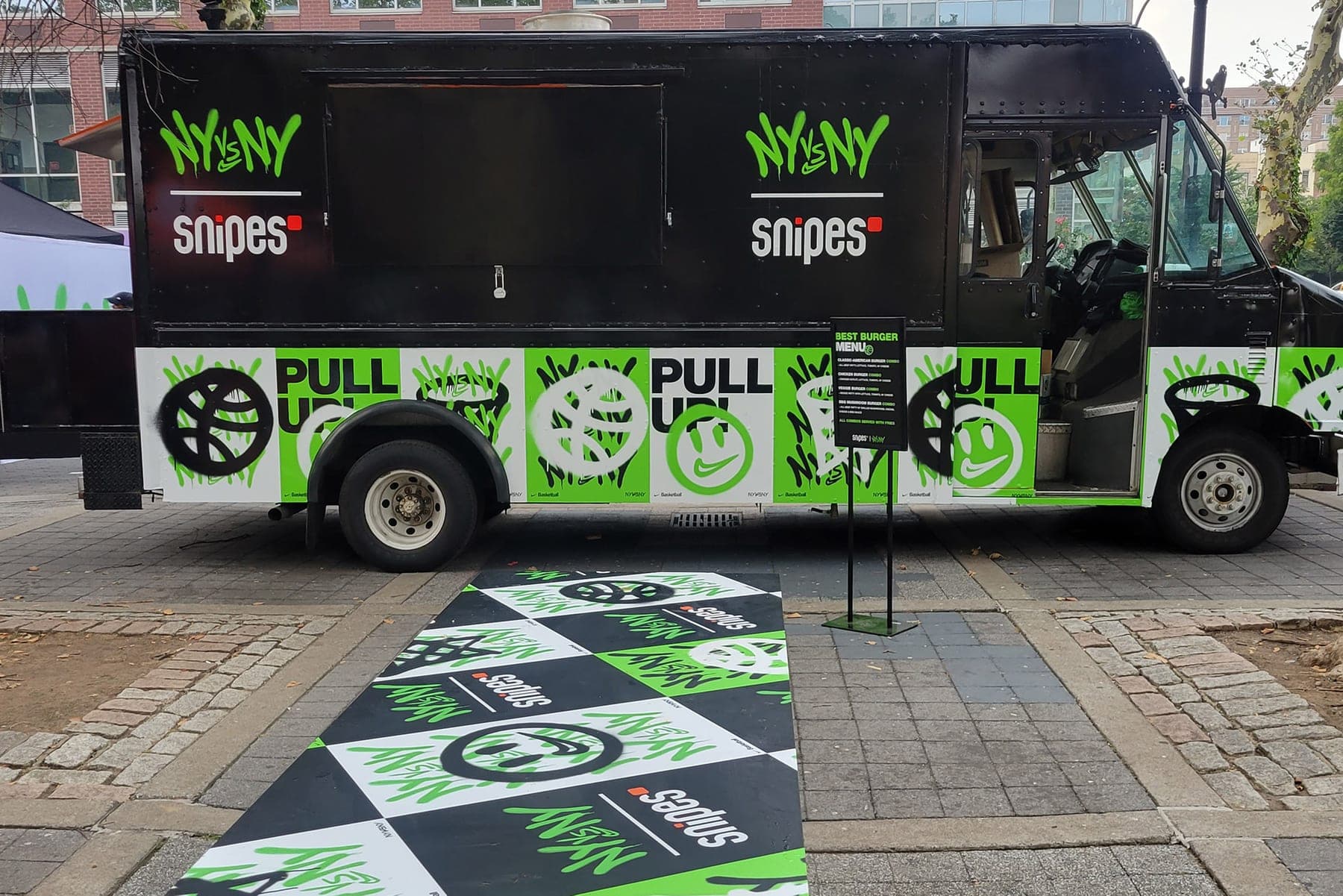
- One large image beats many small ones. A single illustration, product shot or pattern that runs the length of the vehicle photographs cleanly. A collage of messages does not.
- Let the brand color be the whole body. If the campaign has a signature color, wrap the vehicle in it edge to edge. It matches the rest of the build and reads from across a lot.
- Put the logo at camera height. Roughly door top to window line on a van, and the middle of the box on a step van. A logo on the roof is for drones, not people.
- Avoid busy patterns across doors and handles. Fine detail that crosses a door gap, a handle recess or a fuel door breaks visibly in a close photo. Keep detail on the flat panels and let seams fall in solid color.
- Design the rear. In a lot the vehicle is often approached from behind, and the rear doors are a big flat panel at eye level.
Match the vehicle to the rest of the build
The vehicle rarely stands alone. There is an inflatable, a tent, a sampling counter, a backdrop and a set of signs, and they are all supposed to look like one campaign. The easiest way to get there is to share files. Send us the same artwork, Pantone references and fonts the fabricator and the inflatable vendor are using, and the vehicle will sit in the footprint as part of the set rather than next to it.
Color is what goes wrong most often. A blue on vinyl, on tent fabric and on a PVC inflatable are three different processes. If the color matters, get a physical sample from each vendor and compare them in daylight. We can print a swatch on the actual film in a day.
Working the timeline backward
Everything on an activation job is scheduled from the event date. The steps run in order, and each depends on the one before it.
- 1Artwork lock. Final files, copy and colors. Changes after this point cost days, not hours.
- 2Proof. The art placed on the template for the exact vehicle, showing where seams, handles and lights fall. One round of sign-off, sometimes two.
- 3Print. A van is a day of printing; a step van or a full SUV is more.
- 4Laminate. Printed panels are laminated and left to outgas before install. Skipping this is how wraps lift on day two.
- 5Install. One to three days in the bay depending on the vehicle. Vintage and heavily contoured vehicles take longer.
- 6Delivery or handover. To the client, the rental yard, the trailer or straight to site.
Add a buffer day between install and delivery. It absorbs a late file, a reprint on a damaged panel, or a vehicle that arrives with a dent we have to work around. Tell us early if the vehicle is a rental: pickup dates and the condition report at return affect when we can have it in the bay and how we spec the film.
Load-in in New York City
Where the vehicle goes and how it gets there is the activation team's part of the job. Street permits, plaza agreements, parking, security and site access belong to the client or the agency. Our part is producing the vehicle and getting it to the handover point on the agreed day, or installing on site when that is the better plan.
On-site install works when there is covered space, power, a clean vehicle and enough time before doors open. It is the right answer for a vehicle that cannot come to Queens or is already positioned at the venue. Otherwise the bay is the better environment, and the vehicle leaves finished.
After the run
When the campaign ends there are three options. Removal: we take the film off, clean the adhesive and return the vehicle to factory finish, which is what a rental company expects and what most one-off activations need. Conversion: if the vehicle is yours and the look has a longer life, we reprint the same art on long-life film so it becomes a fleet wrap. Reuse: a tour keeps the same wrapped vehicle for the whole run, with a check at each stop for lifted edges or damage, and a brand with seasonal activations can keep one van wrapped and store it between dates. If the vehicle changes, the layout built on the template transfers to the next one of the same model with little rework.
What to send us
- 1Event date, and the load-in date if it is different.
- 2Venue or venues, and whether the vehicle needs to be at the site or at a handover point.
- 3The vehicle: yours, rented, or ours to source. Include the model and, if you have it, photos of the actual unit.
- 4Artwork status: final files, a concept, or a brand guide and a brief.
- 5Run length: one day, a weekend, a month, a tour.
- 6Whether the vehicle needs to come back to factory finish at the end.
With those six items we can return a proof schedule, an install window and a delivery plan in one reply, and tell you plainly whether the date is achievable with the buffer in it.
Common questions
Can you wrap a rental van for an activation?+
Yes, and most activation vans are rentals. We use removable film and remove it before the vehicle goes back. Check the rental agreement for language about graphics and tell us the return date so removal is scheduled before it.
How far ahead of the event should we book?+
As soon as the date is fixed. The production steps are sequential, and the vehicle usually has to be booked and delivered to us before any of them start. Contact us with a date and a vehicle in mind, even if the artwork is not final.
Can the same wrapped vehicle be used across several cities?+
Yes. A properly laminated wrap holds up across a tour. Inspect it at each stop for lifted edges or loading damage, and we can supply a spare printed panel for the most exposed areas.
Do you handle permits and parking at the venue?+
No. Permits, plaza agreements, parking and site access belong to the client or the agency. We produce the vehicle and deliver it or install it on site as agreed.
Next step
Let's scope your project.
Send the vehicle list and artwork status; we'll come back with a scope and timeline.