Notes from the shop · Fleet Wraps
Full vs. Partial Van Wraps: How NYC Fleets Decide
Full wrap, partial wrap or lettering on a cargo van: how brand color, body color, use and fleet size decide coverage on Sprinter, ProMaster, Transit and NV.
· 8 min read · NYC Car Wraps, Long Island City
Most cargo vans that come through our bay in Long Island City leave with one of three treatments: a full wrap, a partial wrap, or lettering. Buyers often assume full coverage is the serious option and the rest is a compromise. Our view is simpler: coverage depends on what the brand looks like, what color the van is, how it is used and how many you run.
What full, partial and lettering mean on a cargo van
The terms get used loosely, so here is how we use them when we scope a job.
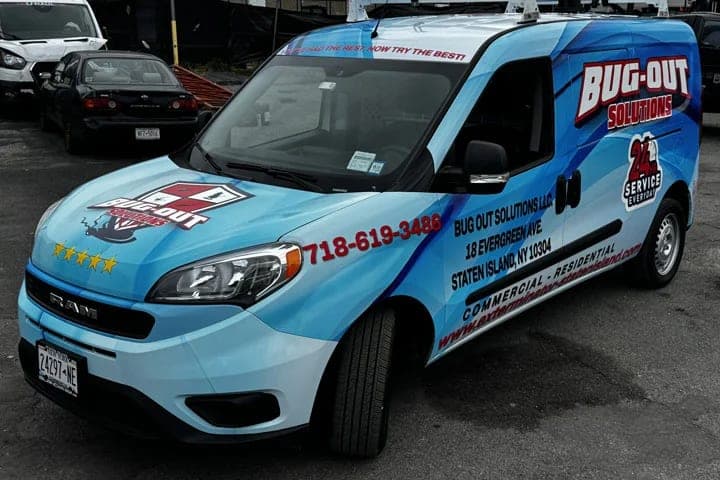
- Full wrap: printed cast film over every painted panel visible at street level: sides, rear doors, hood, front fascia and the smooth sections of the bumpers. The roof is usually left out on a high-roof van.
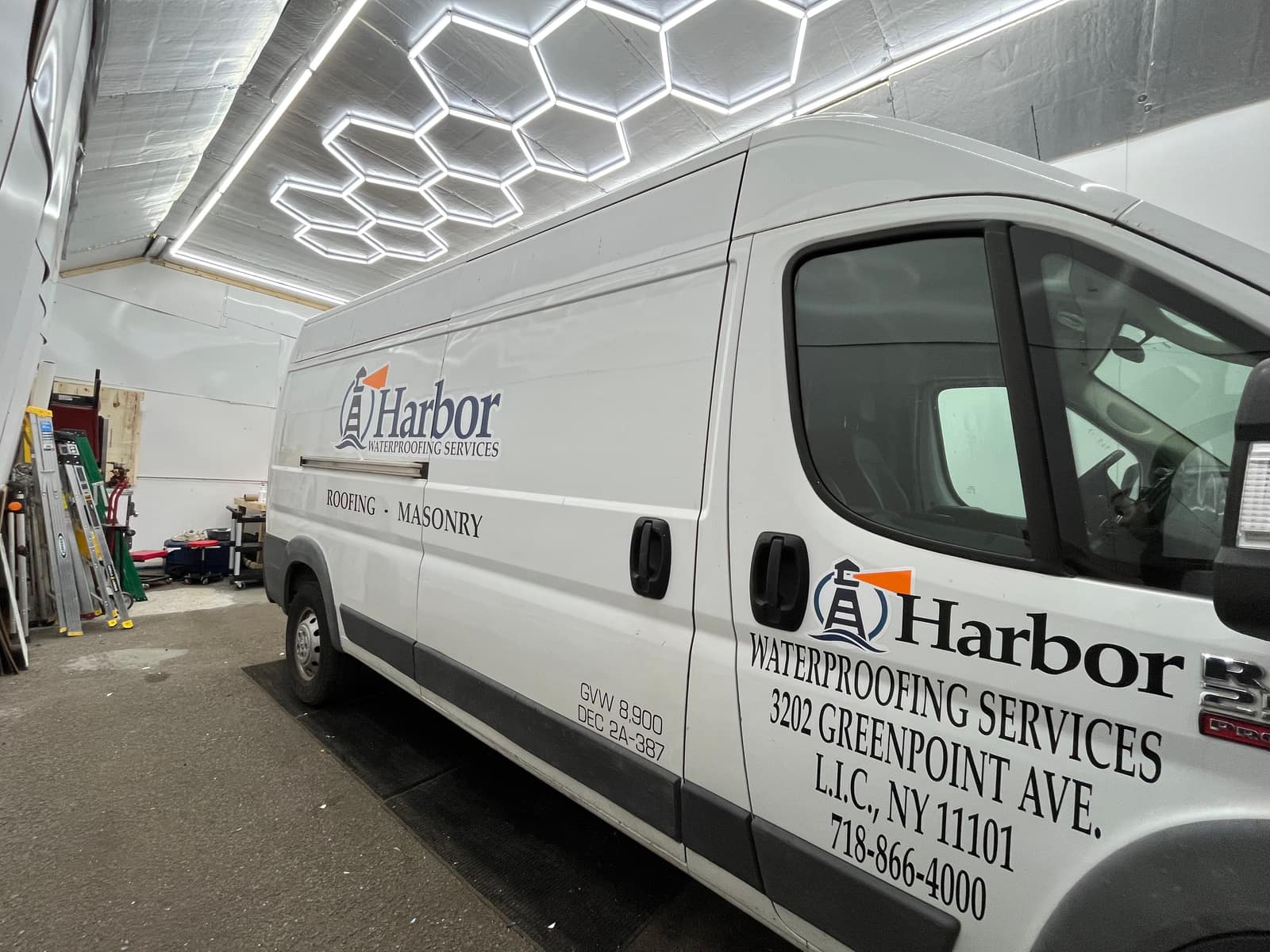
- Partial wrap: printed graphics on selected panels, usually the sides and rear doors, with the factory color showing everywhere else.
- Lettering: cut vinyl for the company name, logo, phone number, website and any DOT or unit numbers. No background, no large print. The van stays the color it came in.
The white body is a design element
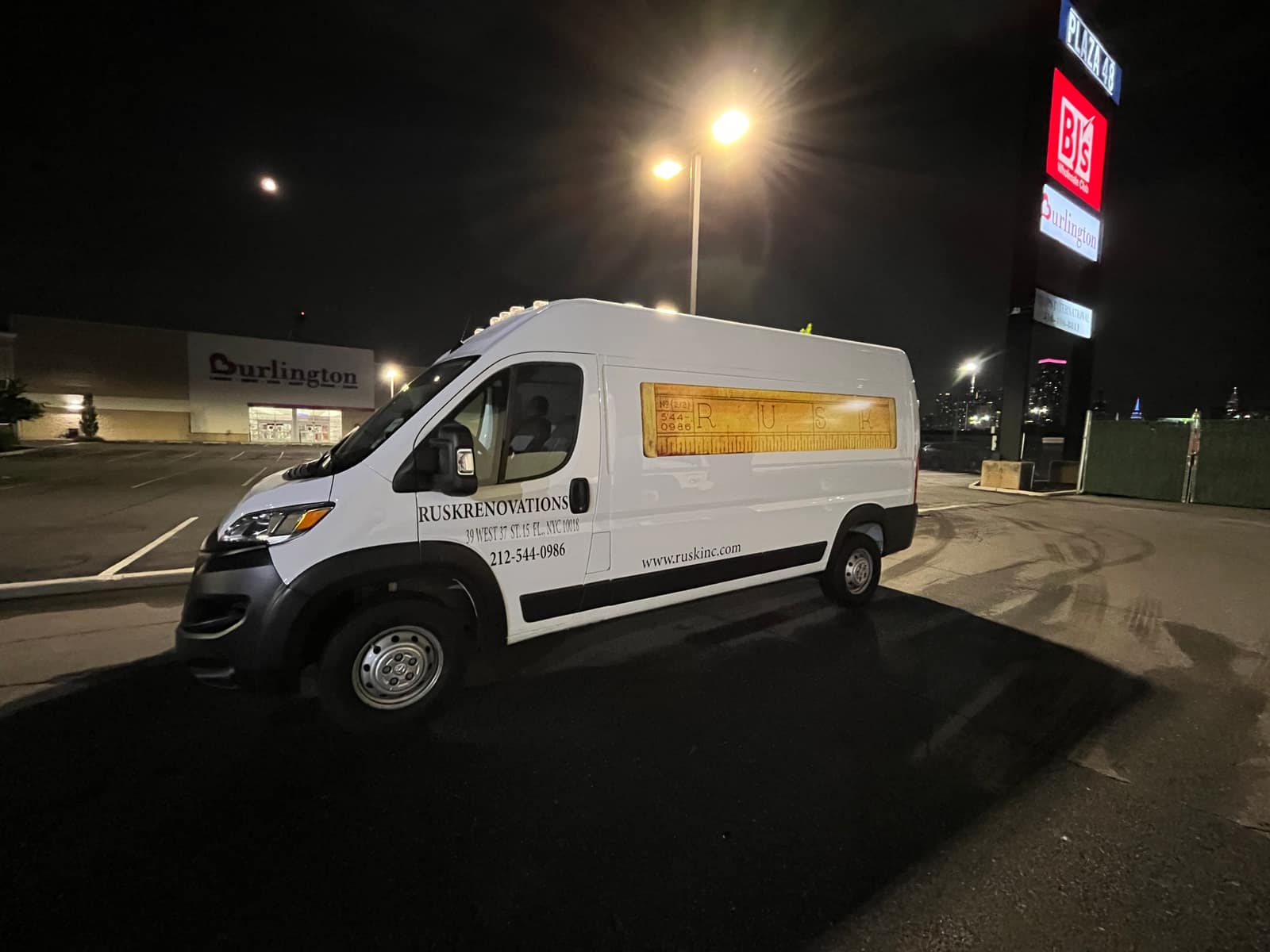
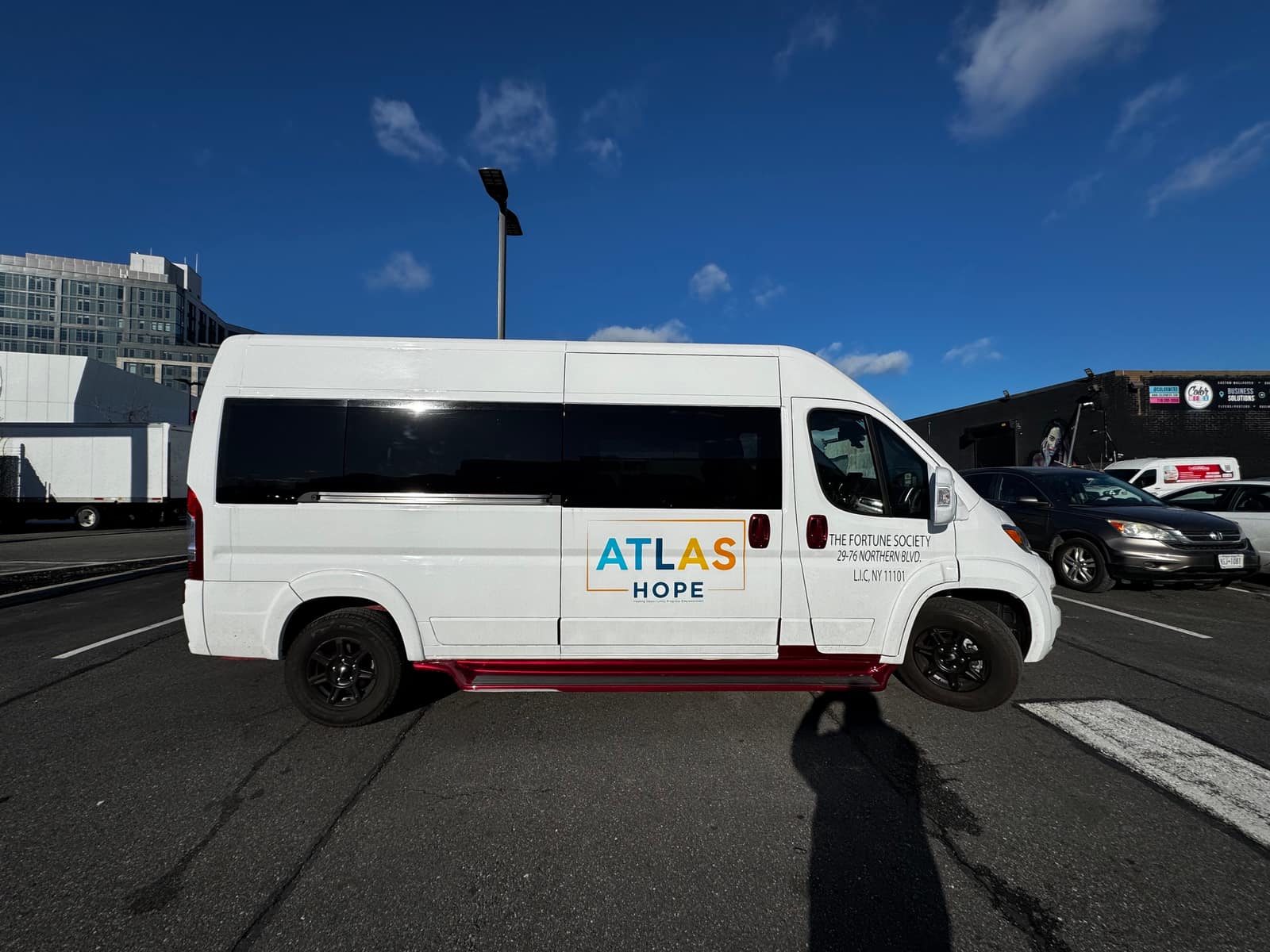
Almost every cargo van sold to a working fleet in the tri-state area is white, and that is an advantage. White is a printed color that takes film and labor to lay down. From the factory it is free, it never peels and it matches on every van you buy. A partial wrap designed around white uses the body as the background and spends the printed film on the logo, the headline and the phone number.
The design work is in the edges. A printed panel that stops at a random point looks like a sticker. A panel that ends on the belt line or tucks into a door gap reads as if the van was built that way. Our design team lays every partial out on the template for the exact model so the edges land where the body wants them.
When full coverage is the right call
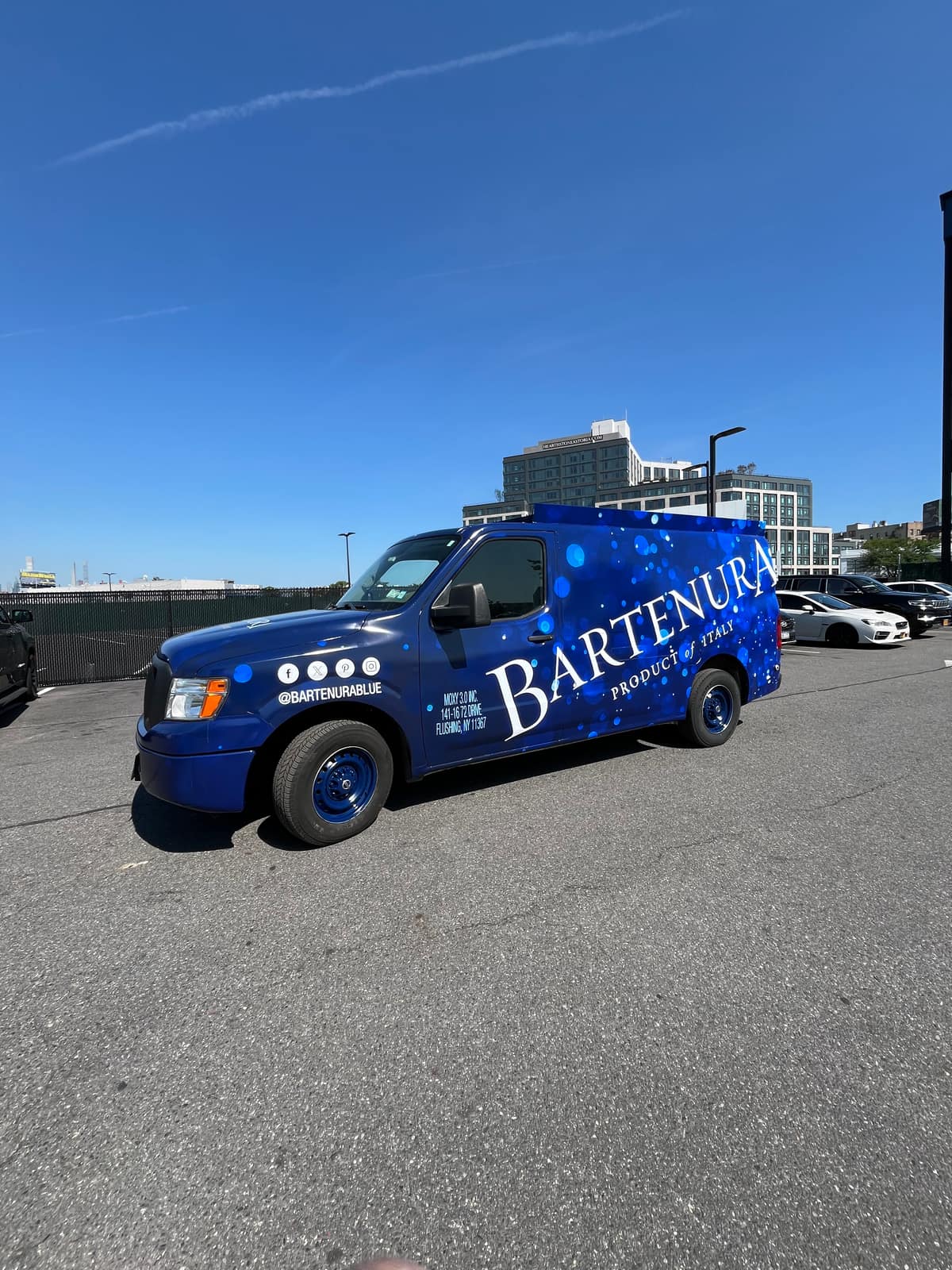
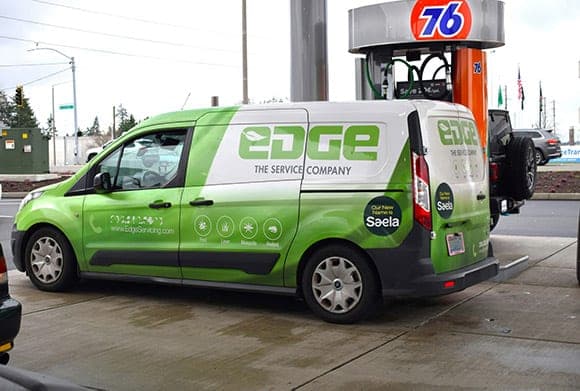
- The brand color is the identity. If customers know you by a specific green, orange or navy, a white van with a logo is not your brand.
- The van is not white. A printed panel on a black Sprinter looks like a patch. Full coverage resets the vehicle to whatever color the layout needs.
- The vehicle is a campaign piece. Sampling vans and event vehicles are photographed from every angle for a few months. Full coverage, sometimes including the roof, is the point.
- You plan to keep the van. A vehicle owned outright or on a long lease can wear the same layout for years and be repaired panel by panel as it ages.
When a partial wrap wins
- Trades and services. The sides and rear doors are what a homeowner sees when the van is parked at the curb, and that is where the graphic goes.
- Delivery and route fleets. Vans that get bumped in loading zones benefit from a layout where one damaged panel can be reprinted and replaced on its own.
- Mixed fleets. A partial layout built around white makes a ProMaster, two Transits and an older NV read as one fleet even though the bodies differ.
- Leased vans. Less film means faster removal at lease end, and the factory color is what the leasing company wants back.
- Budget-per-vehicle programs. When the goal is every van branded on a fixed amount per unit, partial coverage puts the money on the panels that get seen.
Panel by panel: Sprinter, ProMaster, Transit and NV
The four vans we see most are the Mercedes Sprinter, Ram ProMaster, Ford Transit and Nissan NV. Each has a different body, and each panel is a separate decision.
Sides
The largest flat area on any van and the first thing wrapped at every level. Sprinter and Transit sides are broken by a belt line and a sliding door track. ProMaster sides are flatter with large wheel arches. The NV carries a deep pressed body line. Layouts go around these features, not across them.
Rear doors
The panel in front of every driver in traffic, and the one fleets skip most often. Handles, hinges and lights need trimming, and a layout that spans both doors has to survive them swinging open.
Hood and front
Included in a full wrap, normally skipped on a partial. ProMaster and Transit front bumpers are textured plastic in places, and film does not sit well on texture, so we wrap the smooth sections and leave the rest.
Roof
High-roof vans are rarely wrapped on top. A low-roof Transit or NV that parks under office windows sometimes is. The roof takes more sun than any other panel, so it is the first place the laminate ages.
Mirrors and bumpers
Small, curved and slow to wrap. They belong to a color-change full wrap and are usually left factory on a fleet graphic.
Corrugations
Sprinters and some upfitted vans have ribbed lower panels. Film goes into every rib and is post-heated so it stays there. This is the labor difference between a flat ProMaster side and a ribbed Sprinter side, and the reason a partial layout on a Sprinter often stops above the ribs.
Lettering only: what contractors actually need
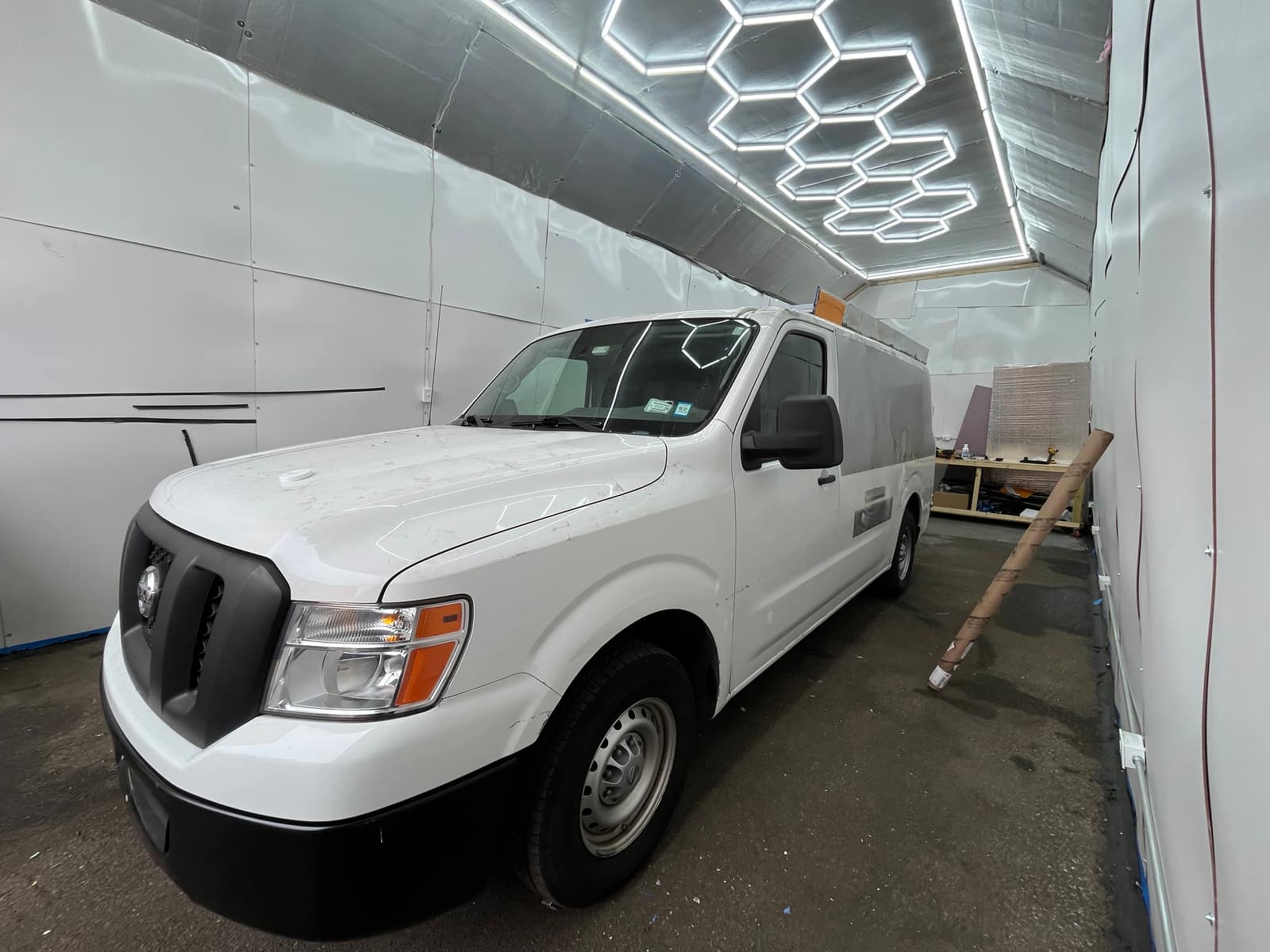
For many contractors the answer is not a wrap at all. Federal and New York State rules require many commercial vehicles to display the company name and USDOT number on both sides in a contrasting color, and most trade clients want the phone number, website and a license number alongside it. That is a cut vinyl job. We cut it from cast vinyl in solid colors matched to the logo: name and logo on the front doors, phone number where it reads at a distance, DOT and unit numbers at the size the regulations call for, and name and phone again on the rear doors.
.jpeg&w=3840&q=75&dpl=dpl_22Enq92PMaeSFTL5E19rqqKCtY9p)
Keeping a mixed fleet consistent
Fleets are rarely bought all at once, and the vans will not all get the same coverage on the same day. Consistency comes from three things: the same logo lockup at the same relative size, the same placement rule (logo forward of the sliding door, phone on the rear doors, DOT on the front doors), and the same colors printed from the same profile. We hold every fleet layout on file so the next van gets the same proof adapted to its template, next week or next year. A fleet can also mix coverage on purpose: sales vehicles in full, route vans in partial, the oldest units in lettering, all from one layout family.
Durability and repair
We print on 3M, Avery Dennison or Oracal cast media and finish it with a UV laminate. On a fleet van in daily NYC use that holds up for years, with the roof and the top of the hood aging first. The practical advantage of a panel-based layout is repair. When a door is dented or a side is scraped, we reprint that panel from the saved file and replace it. The rest of the van is untouched. A full wrap repairs the same way, but a fresh panel next to a faded one will show, so we keep the original print profile on file to match as closely as the material allows.
Leased vans and removal
Wraps come off. Cast vinyl on factory paint in good condition removes cleanly with heat, and we do the removal ourselves rather than leaving it to the leasing company's return inspector. Lettering comes off quickly, a partial in part of a day, a full wrap in a day or more including adhesive cleanup. If the van goes back at lease end, tell us up front. It changes the coverage recommendation, and we note the removal in the same quote. Most fleet leases allow removable film, but check yours for graphics language.
What to send us
- 1The van list: year, make, model, roof height and wheelbase, and how many of each.
- 2The body color. If any van is not white, say so. It changes the answer.
- 3Whether each van is owned or leased, and when the lease ends.
- 4Your logo as a vector file and your brand colors. A screenshot is fine to start.
- 5What must appear on the van: phone, website, DOT number, license numbers, unit numbers.
- 6Photos of one van from each side and the rear. Phone photos are fine.
With that we can come back with a coverage recommendation per vehicle, a proof on the correct template and an install plan, either in our bay at 4700 Northern Blvd or on site at your yard across the five boroughs, Long Island or New Jersey.
Common questions
Can we start with lettering and add a partial wrap later?+
Yes. We design the lettering as the first layer of a fleet layout, so when a printed panel is added it fits around the lettering already on the van rather than replacing it.
Does a partial wrap look cheaper than a full wrap?+
Not when it is designed for the van. What people notice is a panel that ends at a random spot. Layouts that end on a body line or a door gap look built in.
Which coverage lasts longer?+
Same material, same life. A full wrap has more surface exposed to the sun, so it has more places to age. A partial wrap concentrates the film on the sides and rear, which age slowest.
Do you install at our depot or only in Queens?+
Both. Our bay in Long Island City is the controlled environment, but we install on site across the five boroughs, Long Island and New Jersey when there is covered space, power and clean, staged vans.
Next step
Let's scope your project.
Send the vehicle list and artwork status; we'll come back with a scope and timeline.