Notes from the shop · Lettering & Compliance
Truck Lettering in NYC: What Has to Be on a Commercial Vehicle
What the federal USDOT marking rule, New York State and the NYC traffic rules expect on a work vehicle, and how to letter it so it reads at a distance.
· 9 min read · NYC Car Wraps, Long Island City
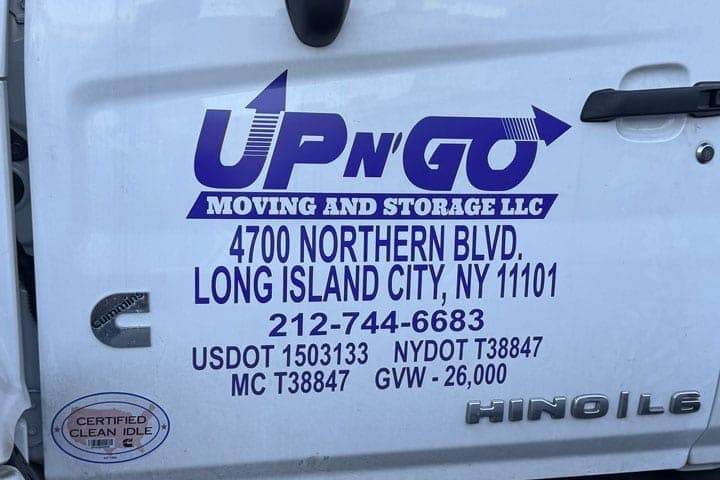
Most lettering jobs that come through our bay in Long Island City start with the same question: what actually has to be on the truck? The answer depends on where the vehicle operates, how heavy it is, and what the owner wants to do with it, like park in a loading zone without a ticket. This post lays out the layers we see most often, from the federal marking rule down to letter height and vinyl choice, so you can bring us a list rather than a guess.
1. The federal USDOT marking rule
If a commercial motor vehicle crosses state lines for business, the Federal Motor Carrier Safety Administration marking rule at 49 CFR 390.21 applies. It asks for two things: the legal name or a single trade name of the motor carrier operating the vehicle, and the carrier's USDOT number with the letters USDOT in front of the digits. Both go on both sides of the power unit, meaning the tractor or the truck itself, not the trailer.
The rule does not name a font or a letter height. It sets a performance standard: the marking has to contrast sharply with the background and be legible from 50 feet in daylight while the vehicle is parked. It also allows the marking to be on a removable device such as a magnetic sign, as long as it meets the same test. Most fleets we work with want cut vinyl so it does not walk off in a car wash.
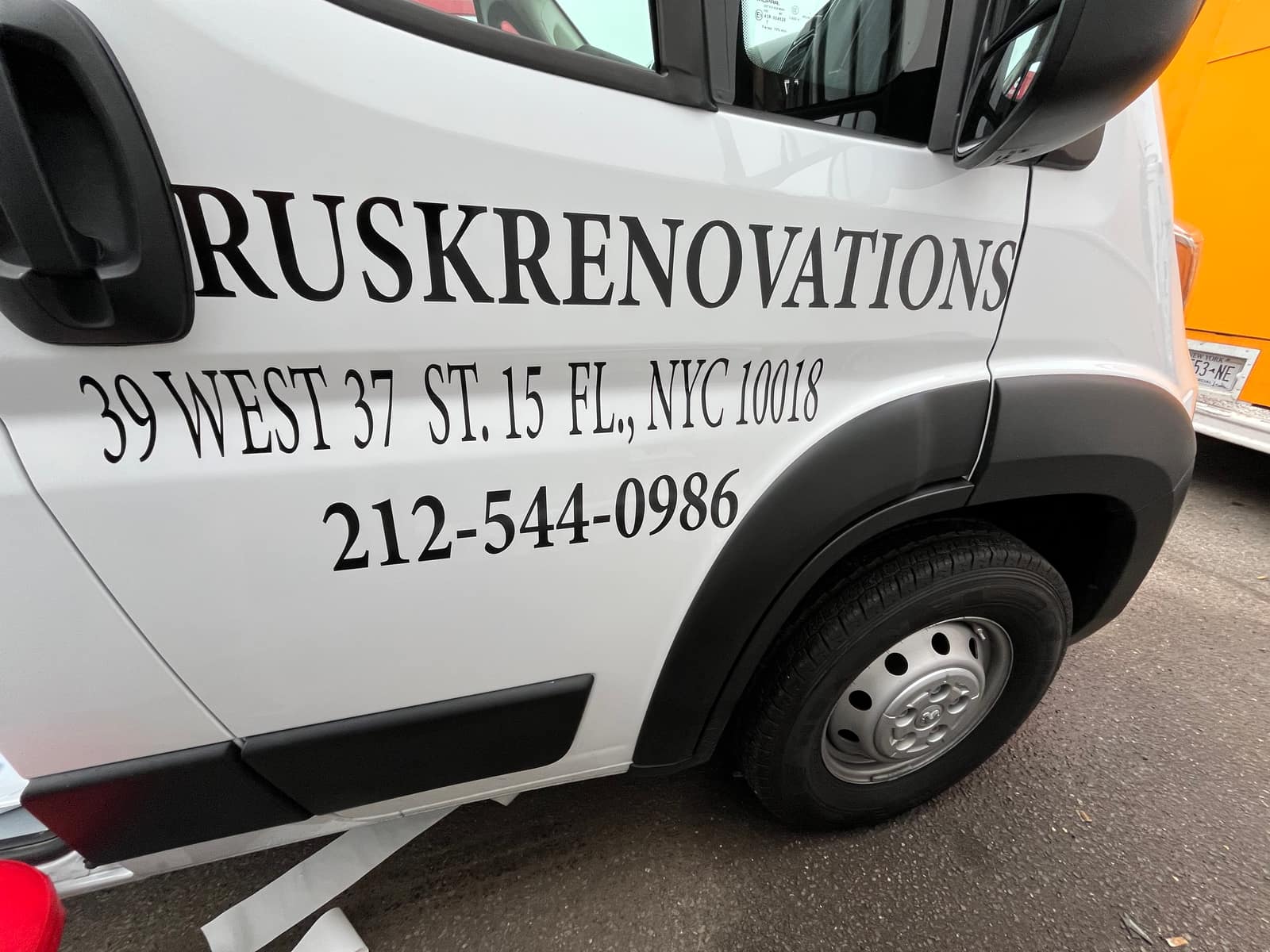
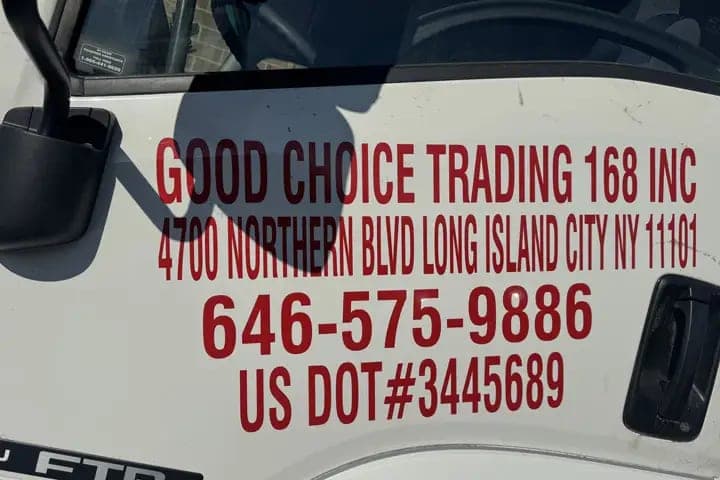
Two points trip people up. The name on the truck has to match the name the USDOT number was issued under, or a trade name on file with FMCSA. And older vehicles sometimes still carry an MC number from earlier requirements. Whether that still belongs on your truck depends on your operating authority, so check before copying it onto a new vehicle.
2. New York State and the NYC traffic rules
Staying inside New York does not mean staying outside the marking rules. New York requires intrastate carriers above a weight threshold to obtain a New York USDOT number and display it in the same manner as the federal marking. The threshold has changed over the years, so check the current figure with the NYS DMV or NYSDOT rather than relying on what your last shop told you.
The other layer is local. The NYC traffic rules define a commercial vehicle for parking and standing purposes, and that definition decides whether you can use commercial loading zones and the other commercial parking allowances. Among other conditions, the vehicle has to display the registrant's name and address on both sides in letters at least three inches high. The rule also speaks to where on the doors or side panels the lettering sits and to contrast with the body color, so read the current text before finalizing a layout.
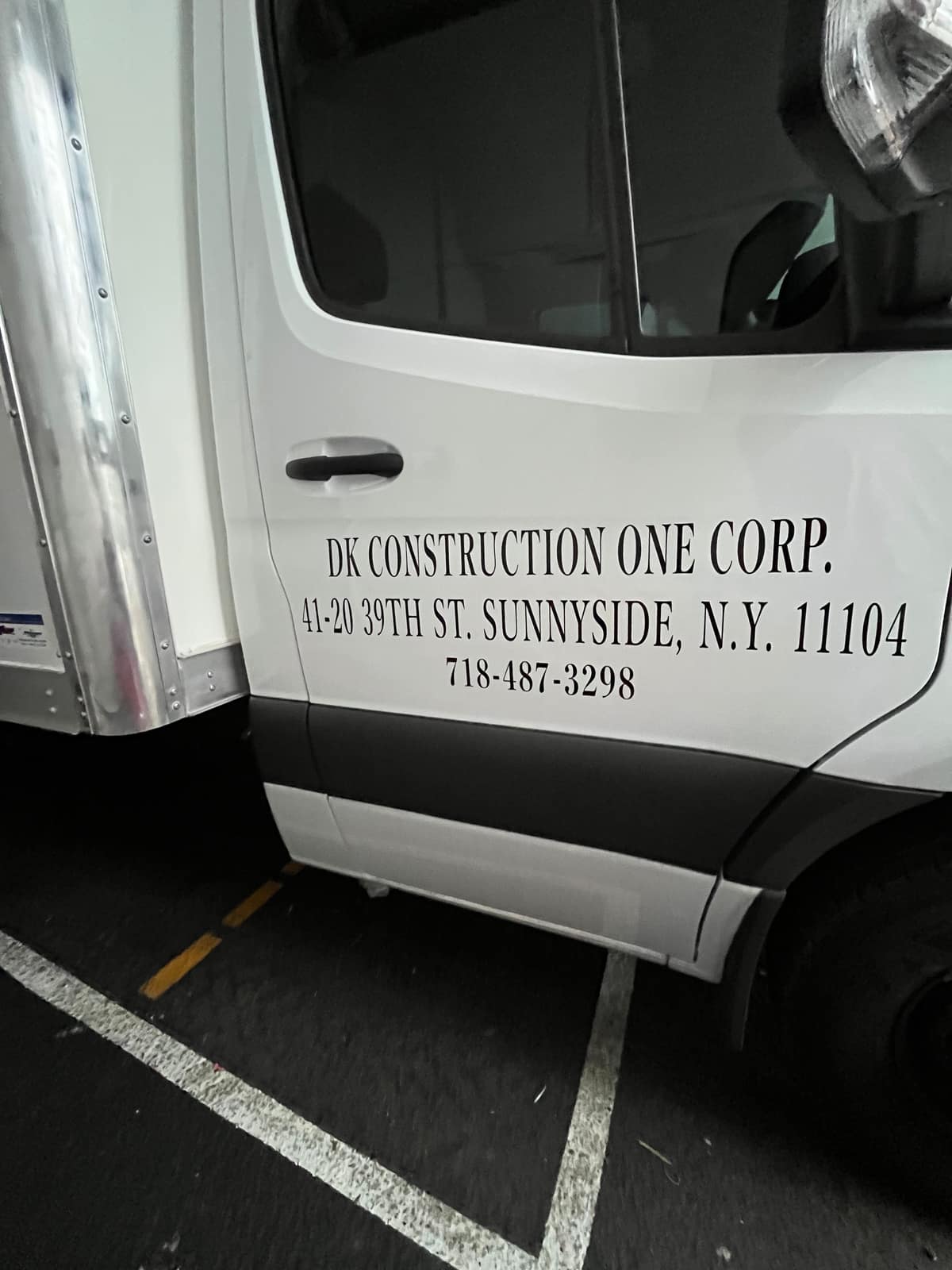
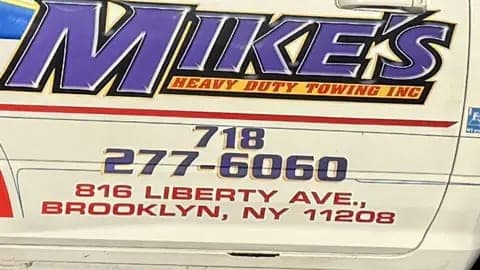
This is why nearly every contractor van we letter carries a full street address, not just a phone number and a website. The lettering alone does not make a vehicle commercial, since the registration and the body have to qualify too, but without it the other conditions do not help you.
3. GVW and GVWR markings
Some fleets add the gross vehicle weight or gross vehicle weight rating as a small line under the USDOT number. This is not part of the federal marking rule, and the NYC traffic rules do not ask for it. It shows up because a state the fleet travels through requires it, or because a customer site or scale house asks for it. If you run into other states regularly, check their rules before deciding.
4. Unit numbers, safety messages and phone numbers
Beyond the required marks, most fleets add a handful of practical items. Unit numbers on the cab corners and rear make a vehicle easy to identify in a yard, on a dash cam, or in a maintenance log. A driving feedback line with a phone number is a management choice rather than a legal one. A main phone number and a website are marketing, and they are usually the largest text after the company name.
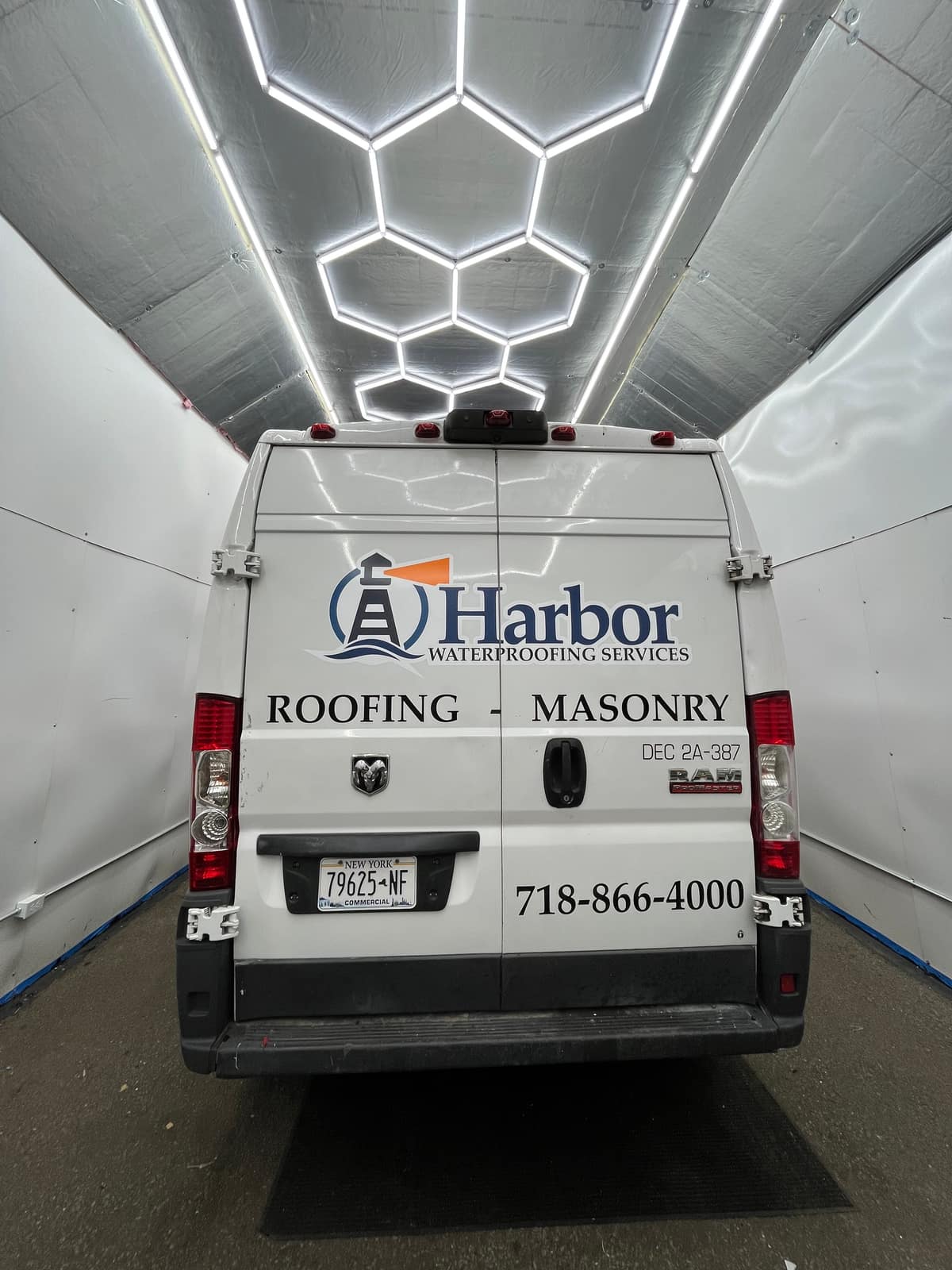
Order matters when space is tight. We place the required marks first at the size the rules need, then the unit number, then scale the marketing text into what is left. Starting with a big logo is how the USDOT number ends up too small on the door jamb.
5. Designing lettering that actually reads
The rules set a floor. Legibility is a design problem on top of it. The rule of thumb we use is roughly one inch of letter height for every ten feet of reading distance. A three-inch letter is comfortable at about 30 feet, which is across a two-lane street. A six-inch letter reads from the far side of a wide avenue. Two-inch or larger letters in a clean font usually pass the federal 50-foot test, but a thin script at two inches will fail it even though the height is there.
- Contrast: dark letters on a white or light vehicle, or white letters on a dark one. Avoid mid-tone letters on a mid-tone body. Red on white reads well in daylight and is a common choice for the name and phone.
- Fonts: a plain sans serif with open counters reads at distance. Condensed fonts fit long addresses but lose legibility as they narrow. Scripts and thin serifs belong in the logo, not the address block.
- Placement: keep lettering above or below body lines rather than across them, and away from rivets, seams and door handles. A letter that crosses a rivet head will lift at that spot first.
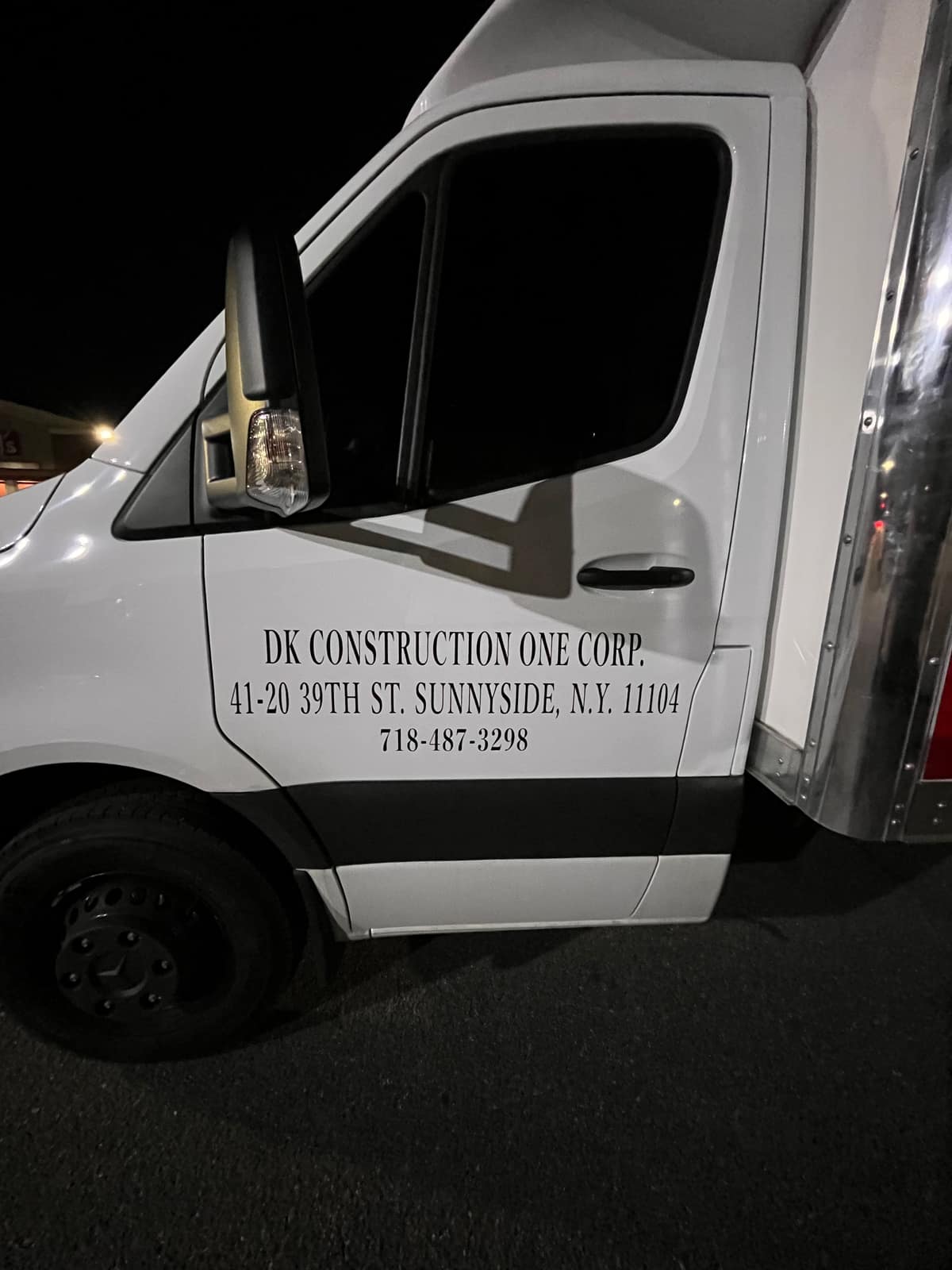
Vinyl choice matters as much as layout. Cast vinyl is thin and dimensionally stable. It conforms to slight curves and around rivet heads, and it does not shrink back from the edges over time, which is why we use it for anything that has to last the life of the vehicle. Calendared vinyl is thicker and fine for flat panels and short-term lettering, but on a corrugated van side it tends to pull back and show a dirty outline within a couple of seasons.
For vehicles that work at night, such as towing, utility and some delivery routes, reflective vinyl brings the lettering up in headlights. Reflective films are heavier and less conformable than standard cast, so we keep them to flat areas and to the elements that need to be seen after dark: the name, the unit number and any safety striping. The rest of the layout goes on in standard cast.
6. Matching lettering across a fleet
A fleet looks like a fleet when the lettering is the same on every unit, even when the vehicles are not. That means one font, one set of colors, one address block, and a rule for where each element lands on each body style. We build a template for each vehicle model, note the letter heights and positions, and keep the cut files so the next van gets the same treatment as the first without re-measuring.
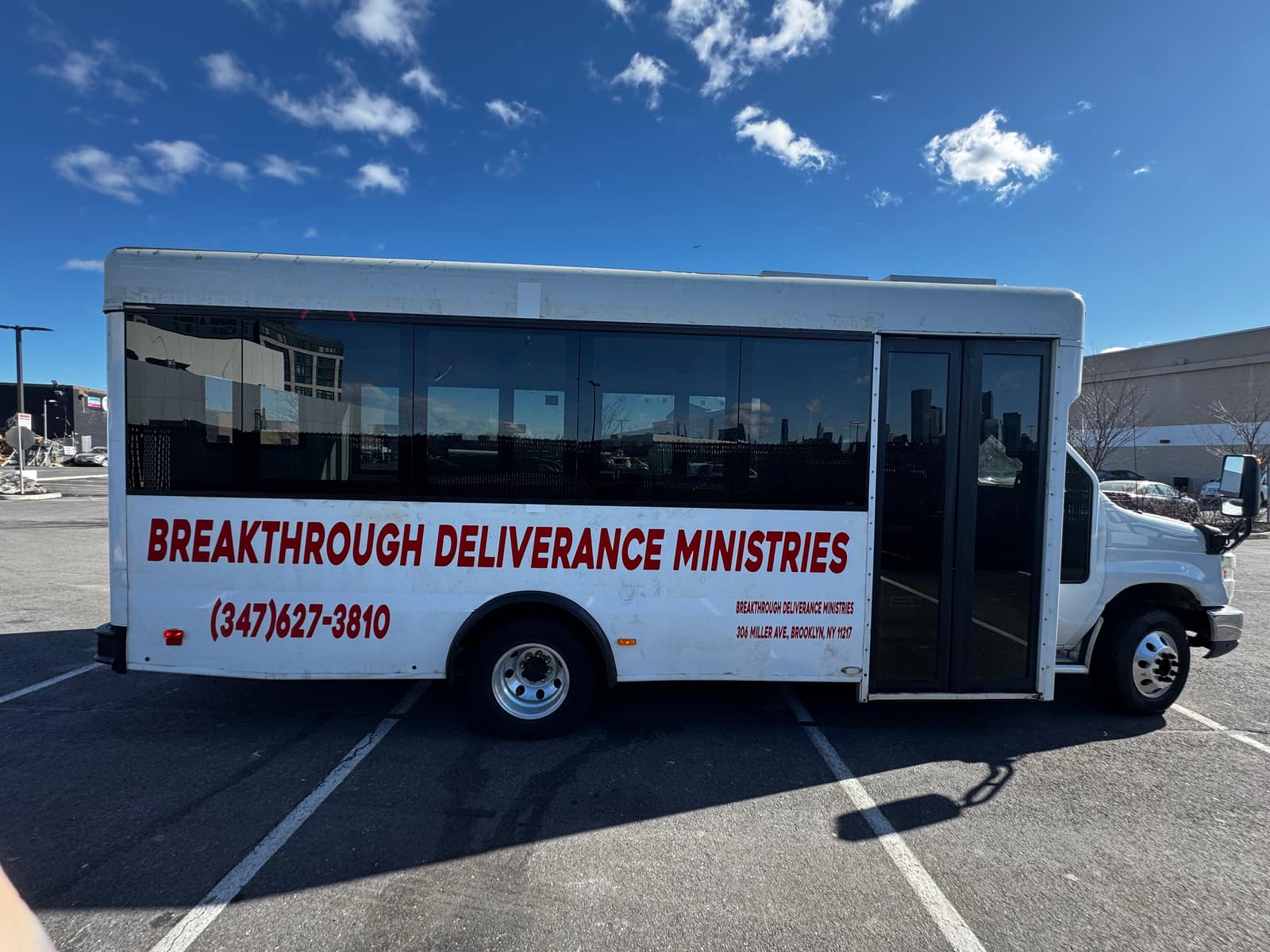
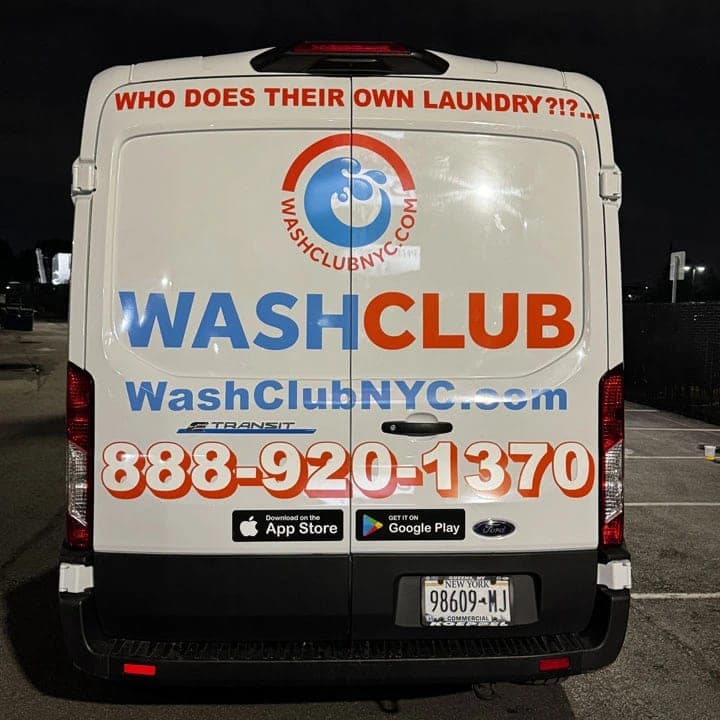
Mixed fleets need some judgment. The three-inch address that fits neatly on a Sprinter door has to move to a different panel on a pickup or a box truck. What stays constant is the font, the color and the hierarchy: name largest, then phone, then address and required numbers. If your vehicles were lettered by different shops over the years, a photo of the one you consider the standard lets us match it rather than guess.
7. Removal and updates
Lettering changes more often than wraps. Companies move, phone numbers change, or a vehicle changes hands. Cut vinyl comes off with heat and patience, and cast vinyl on factory paint leaves the paint as it was. Old calendared vinyl is slower to remove and often leaves adhesive that has to be cleaned before new vinyl goes on.
The most common update we do is a single line: a new address, a corrected phone number, or a new USDOT number after a change in authority. If the original layout was built with each line as its own element, we remove one line and cut a replacement in the same font and height. That is a good reason to have lettering done from a file the shop keeps. And if you buy a used truck that still carries a previous owner's name and number, strip them before it goes to work.
What to send us
- 1The exact legal name or trade name as it appears on your USDOT record, and the number itself.
- 2The registrant name and address as they appear on the vehicle registration, if you want the vehicle to meet the NYC commercial definition.
- 3A list of vehicles by year, make, model and body style, with a photo of each side.
- 4Any unit numbering scheme, driving feedback line, or website you want included.
- 5Whether any vehicle works at night and would benefit from reflective lettering.
With that list we can lay out each vehicle on its template, confirm letter heights against the rules that apply to you, and schedule the install around your vehicles' downtime. Most single-vehicle lettering jobs are done the same day.
Common questions
Do I need a USDOT number if I only work inside New York City?+
Possibly. New York requires intrastate carriers above a weight threshold to obtain and display a New York USDOT number. The threshold is set by the state and has changed before, so confirm the current figure with the NYS DMV or NYSDOT for your vehicle's registered weight.
Is a magnetic sign acceptable for the USDOT marking?+
The federal rule allows a removable device if it meets the same contrast and legibility requirements. Magnets shift, fall off in a wash, or get left in the shop, which is why most fleets ask for cut vinyl. Check whether any other rule that applies to you requires the marking to be permanently affixed.
How big do the letters need to be?+
The federal rule is a legibility test at 50 feet in daylight, not a fixed height. The NYC commercial vehicle definition asks for letters at least three inches high for the registrant's name and address. We size to the larger requirement and then check the layout from across the street.
Will you register the vehicle or apply for the number?+
No. We produce and install the lettering from the information you give us. Registrations, USDOT numbers and operating authority go through the NYS DMV and FMCSA directly, or through whoever handles your compliance.
Next step
Let's scope your project.
Send the vehicle list and artwork status; we'll come back with a scope and timeline.