Notes from the shop · Food Trucks
Food Truck Wraps in NYC: Design, Permits and What Has to Stay Visible
Food trucks are the hardest vehicles we wrap. Here is how we handle the serving window, permit decals, menu boards, night contrast and daily grease.
· 10 min read · NYC Car Wraps, Long Island City
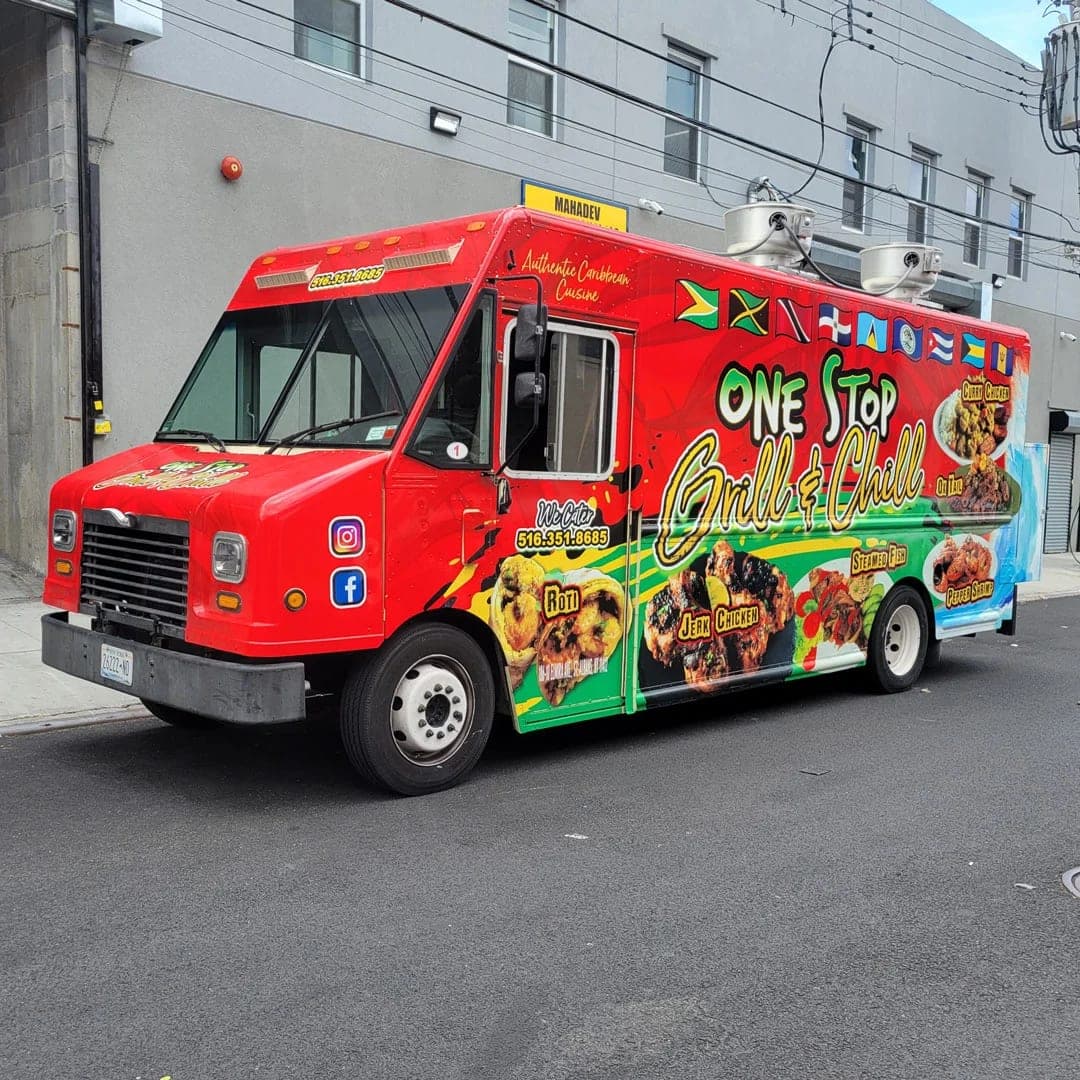
A food truck is the hardest vehicle that comes through our bay in Long Island City, and the one where the wrap does the most work. A box truck for a plumber is a flat billboard. A food truck is a kitchen with a serving window, a generator, roof vents, a propane cage, a step and a row of rivets, and the wrap has to go around all of it while still reading from across the street. This post covers what has to stay uncovered, how we lay out the sides, and what to send us.
Why food trucks are the hardest wrap
Most food trucks in the city started as a step van or a box truck. Then a fabricator cut a window into the side, added a roof deck, ran vents through the wall and bolted a generator box to the rear. Every one of those additions is an edge the film has to be trimmed to, and most sit exactly where the largest graphic wants to be. Rivet lines are heated and post-heated one at a time. A food truck has more of that per foot than any other vehicle we wrap.
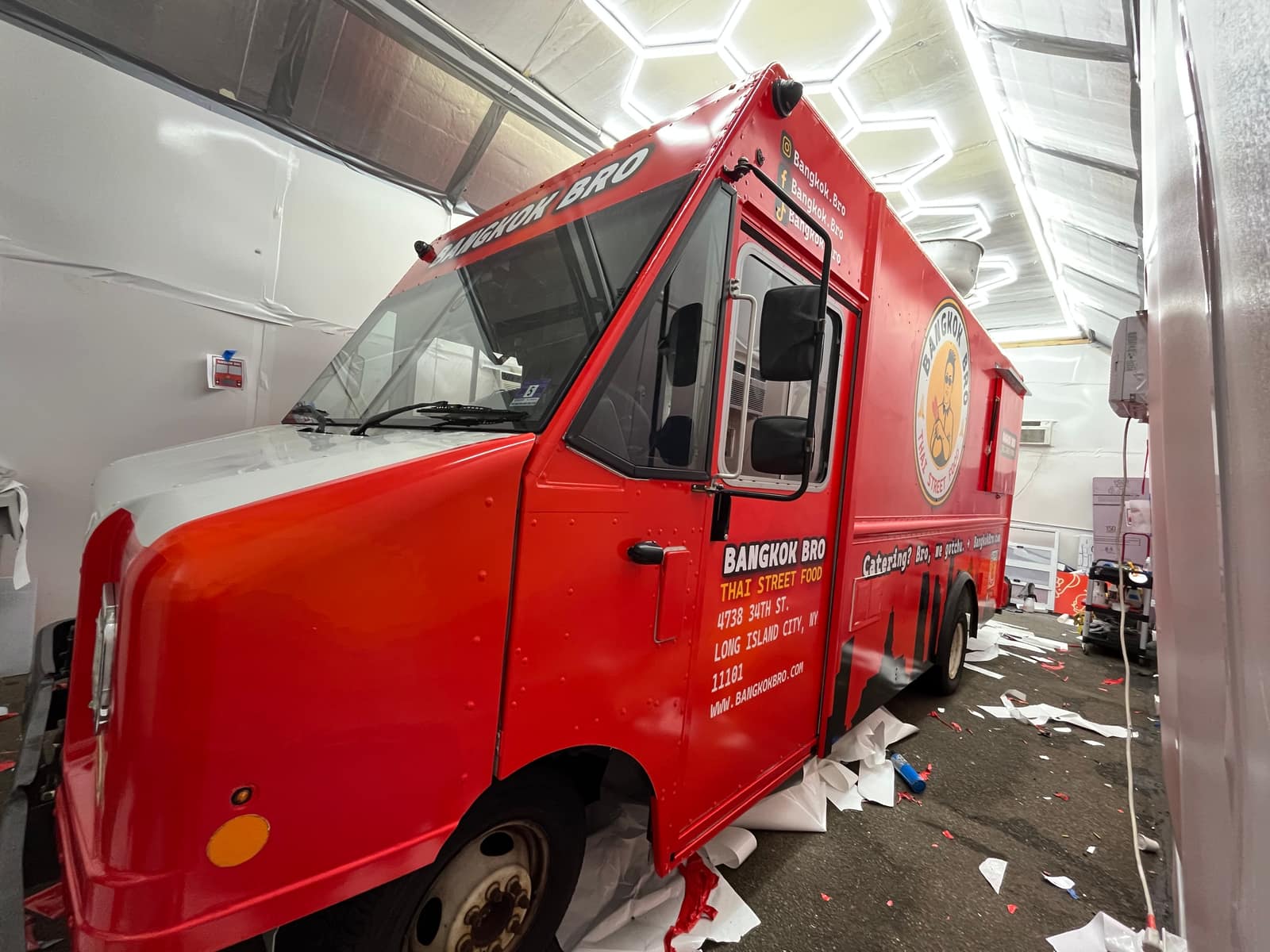
It is worth doing because a food truck lives on its wrap. It parks in one spot, people walk up to it, and the side of the truck is the storefront, the sign and the menu at once.
What has to stay visible and unobstructed
Before design starts, we mark the areas the wrap cannot cover or has to be planned around:
- The serving window, its frame, awning and shutter. The graphic stops at the frame.
- The NYC mobile food vending permit decal and any license that has to be readable from outside. We leave an unprinted area where it is mounted.
- Fire suppression and propane labels, and the propane compartment door.
- Roof and wall vents, the hood exhaust outlet and intake grilles. Film over a vent lifts and traps grease.
- The entry door, the step and the grab handle. The door can be wrapped; the step and handle stay clear.
- The generator door and exhaust, with a margin so heat does not cook the film edge.
Requirements vary by unit, so confirm current NYC Department of Health and FDNY requirements for your truck before we finalize the layout. If your inspector has told you something has to be a certain size or place, send us that note and we will design around it.
Layout that reads from the sidewalk
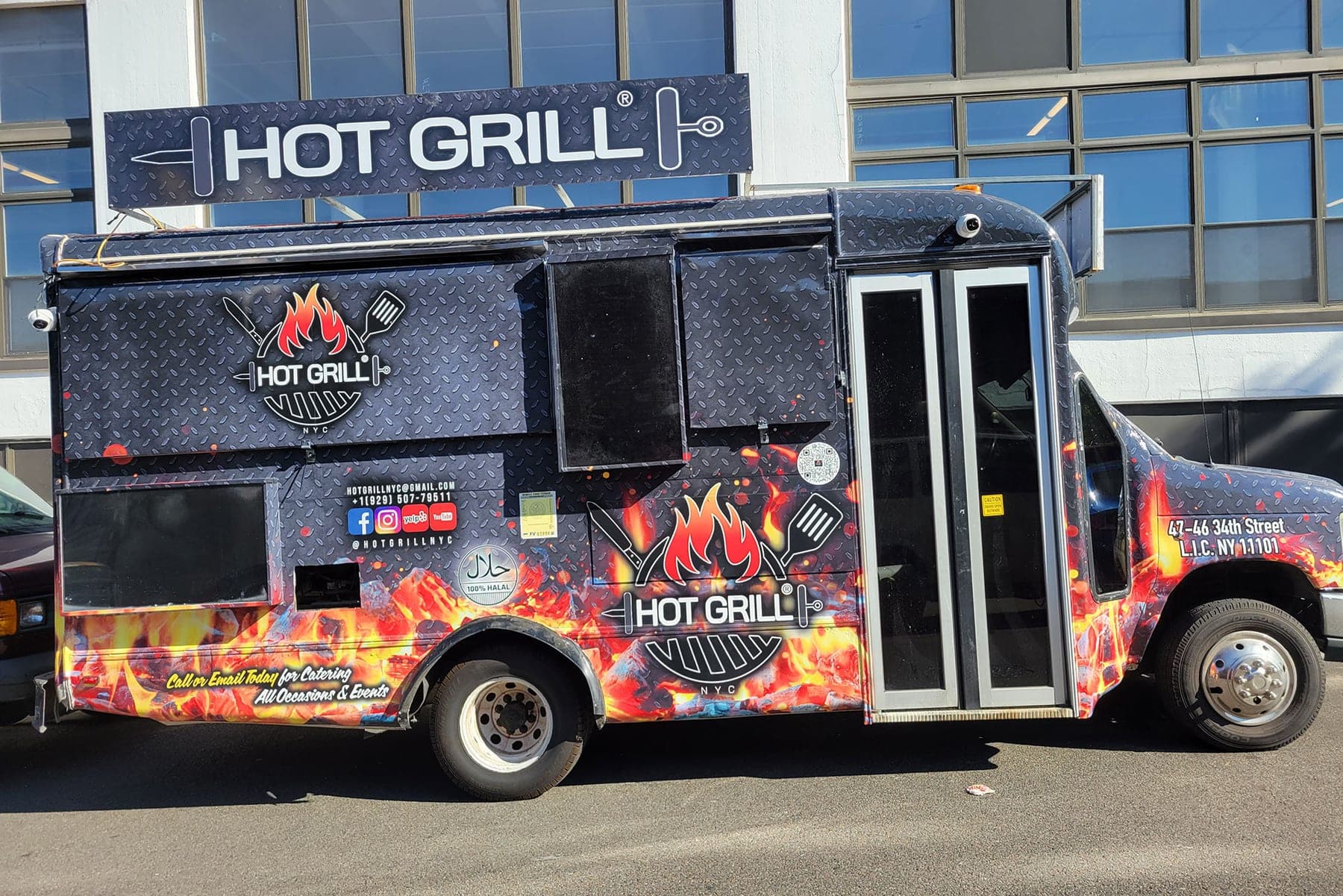
A food truck is read from the sidewalk at 20 to 40 feet by someone deciding in a few seconds whether to walk over. They need to know what you are called, what you serve, then what it costs. We lay out the side in that order, largest to smallest.
- 1Name. High on the box, above the window, in the largest type on the truck. The roof line or awning header is often the only uninterrupted band.
- 2Cuisine. One or two words under the name, if the name does not already say what you serve.
- 3Menu board area. A defined panel near the window, printed into the wrap or mounted as a replaceable panel.
- 4Price board area. Left as a changeable panel, never printed into the wrap.
- 5Social handle, phone or ordering URL. Smaller, low on the box and on the rear, where people in line can read it.
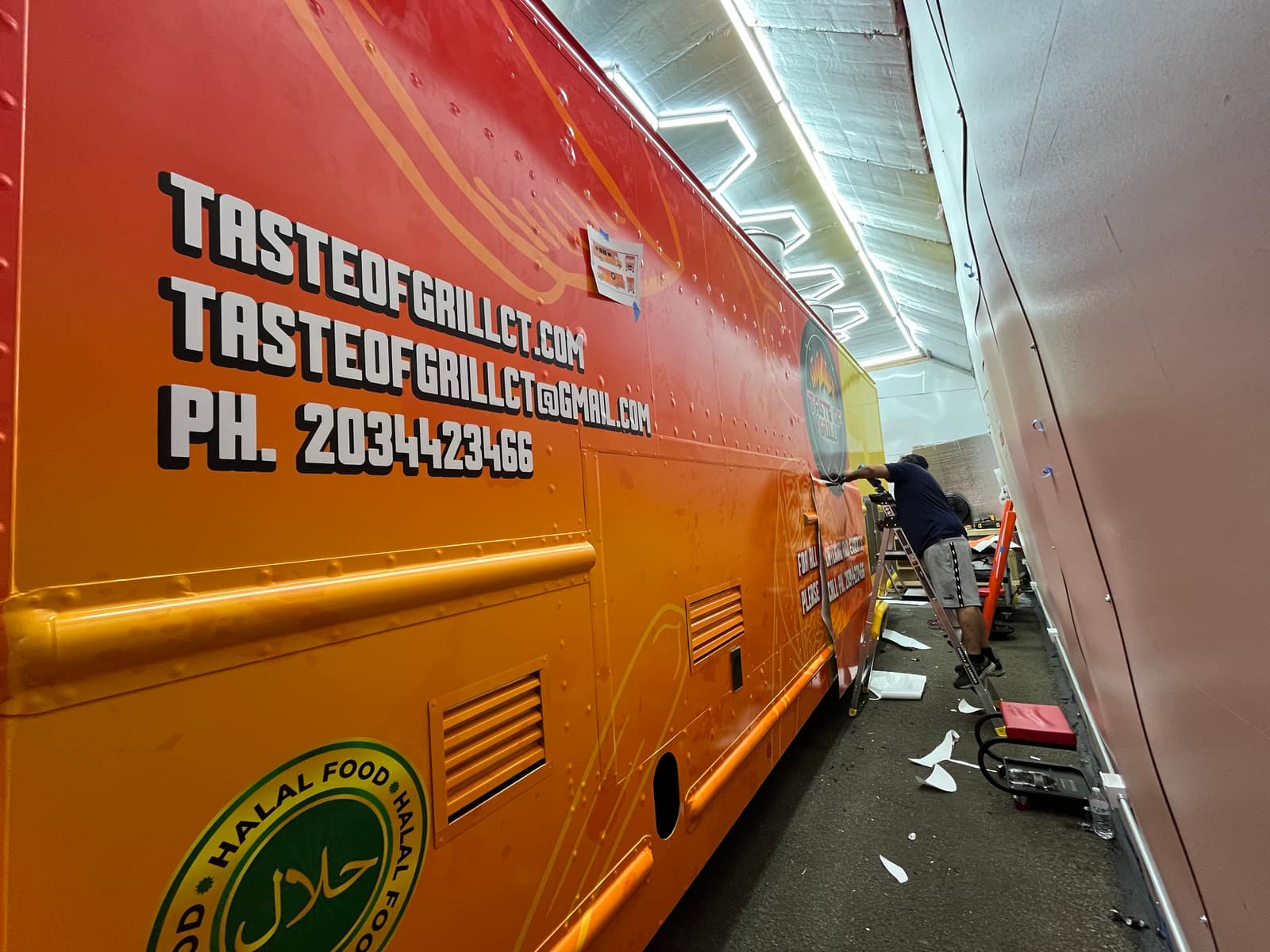
The rear is the second most important face, since it is what people crossing behind the truck see. The name, cuisine and handle go there.
Menu boards: printed in or replaceable
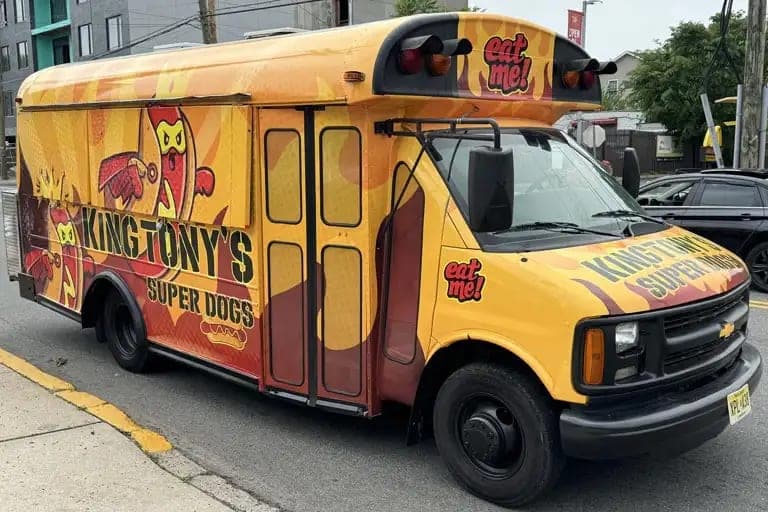
You can print the menu into the wrap. It looks clean and it is the simplest way to get the menu on the truck. The trade-off is that changing an item means reprinting that section, and a patch never matches once the surrounding film has had a year of sun. For most trucks we recommend a hybrid. The wrap carries the name, the cuisine, the imagery and any items you are certain will not change. The menu goes on a separate panel, a magnetic sheet, a rigid board in a frame, or film on a removable substrate. Prices go on a board you can change with a marker or an insert.
Food photography versus illustration
Photography of your actual food is the strongest thing you can put on a truck, and the thing that most often goes wrong. A phone photo that looks fine on a screen falls apart at four feet tall. We need images at print resolution, shot with even light on a plain background, as full-size files rather than whatever a messaging app compressed.
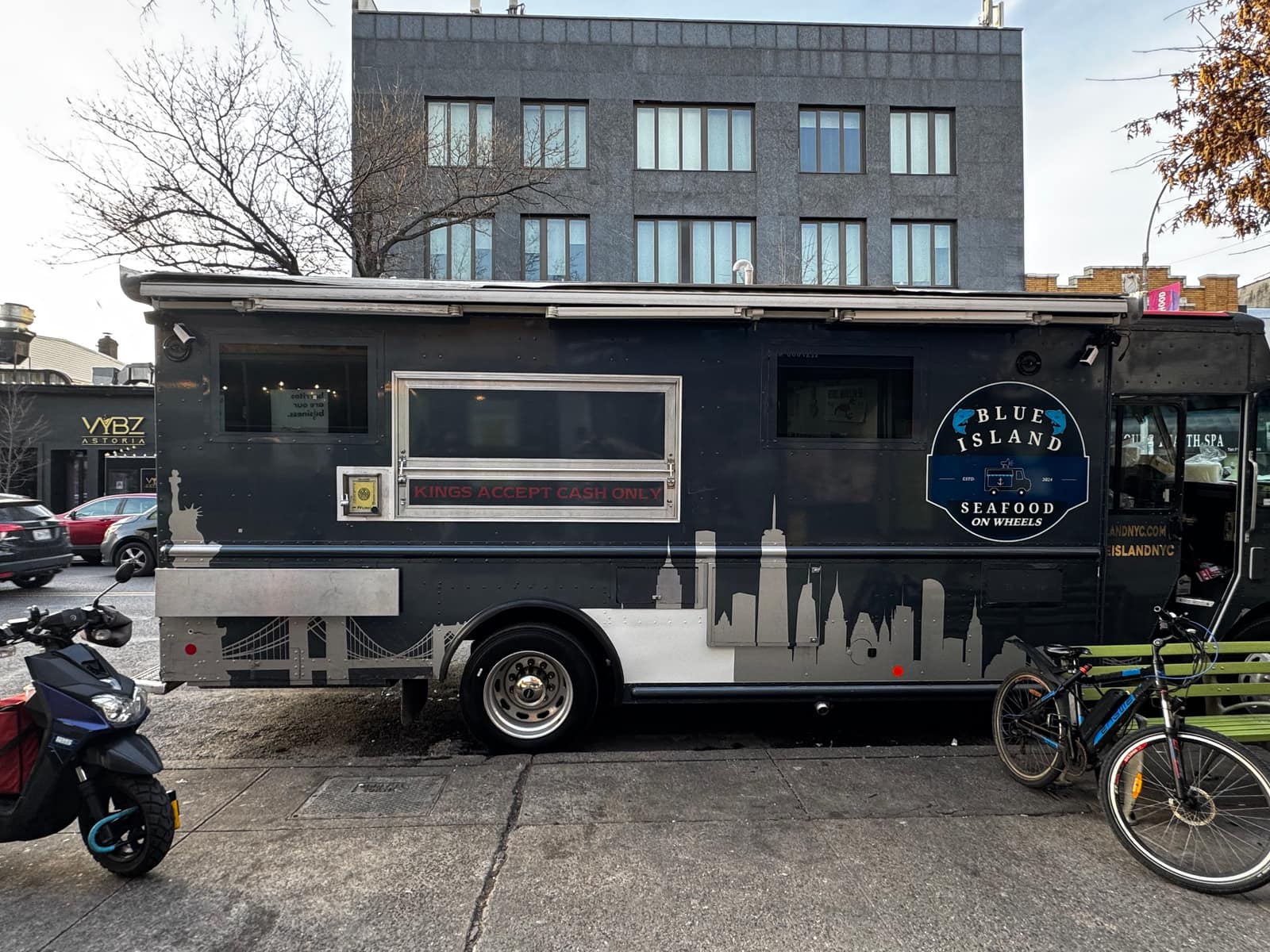
Illustration avoids the resolution problem, because vector art scales to any size. Blue Island Seafood used an illustrated Statue of Liberty and skyline with the name, and the truck reads as a brand rather than a menu.
Color and contrast for night service
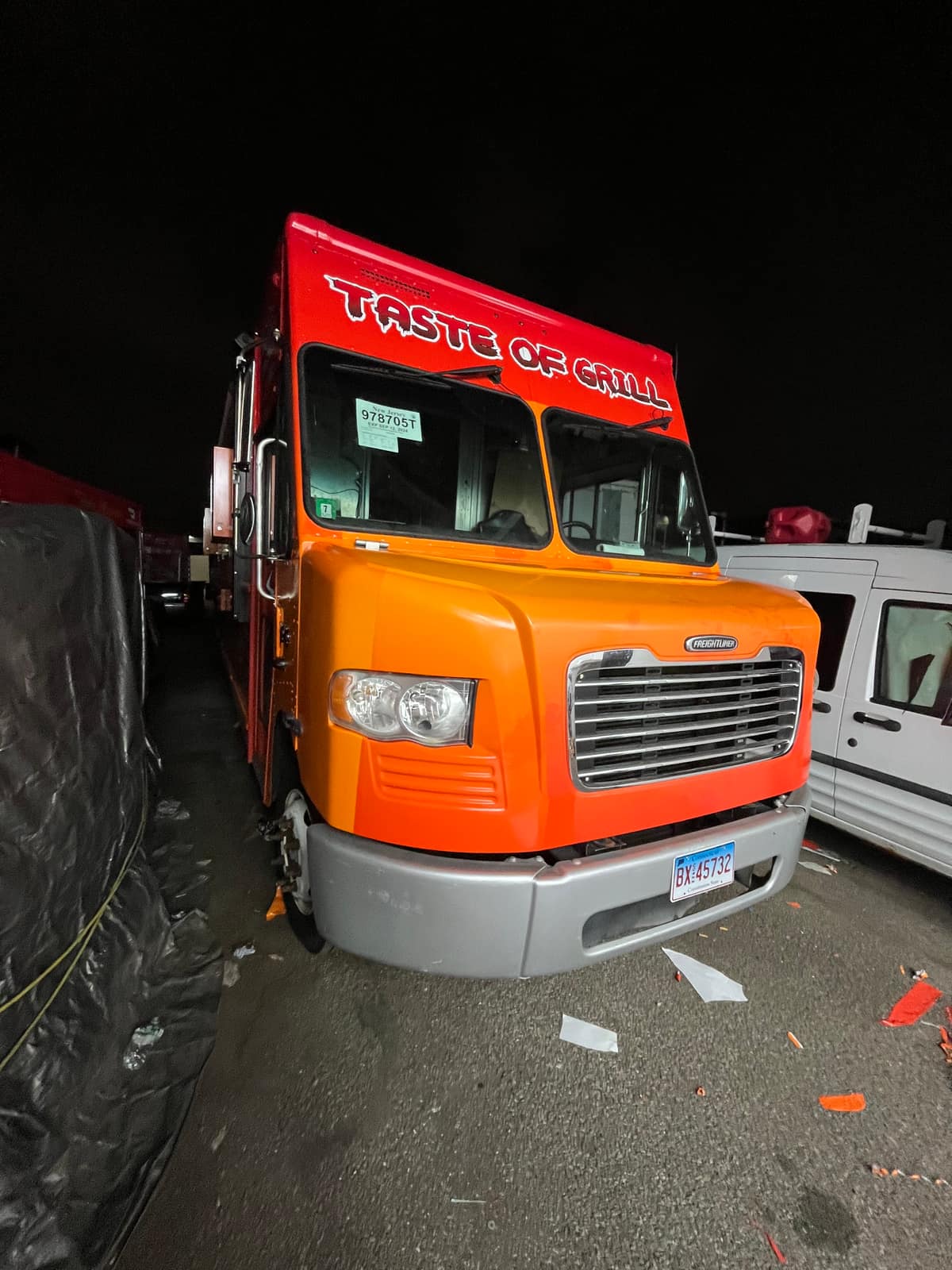
Many food trucks do their real volume after dark, and colors that look right in a daytime proof can go muddy under a streetlight. Dark backgrounds with light type hold up better than the reverse. Red and orange on a red truck read as one color from 40 feet in low light, so the name needs a contrast color or an outline. We check every proof against a darkened version before it prints.
Full or partial on a food truck
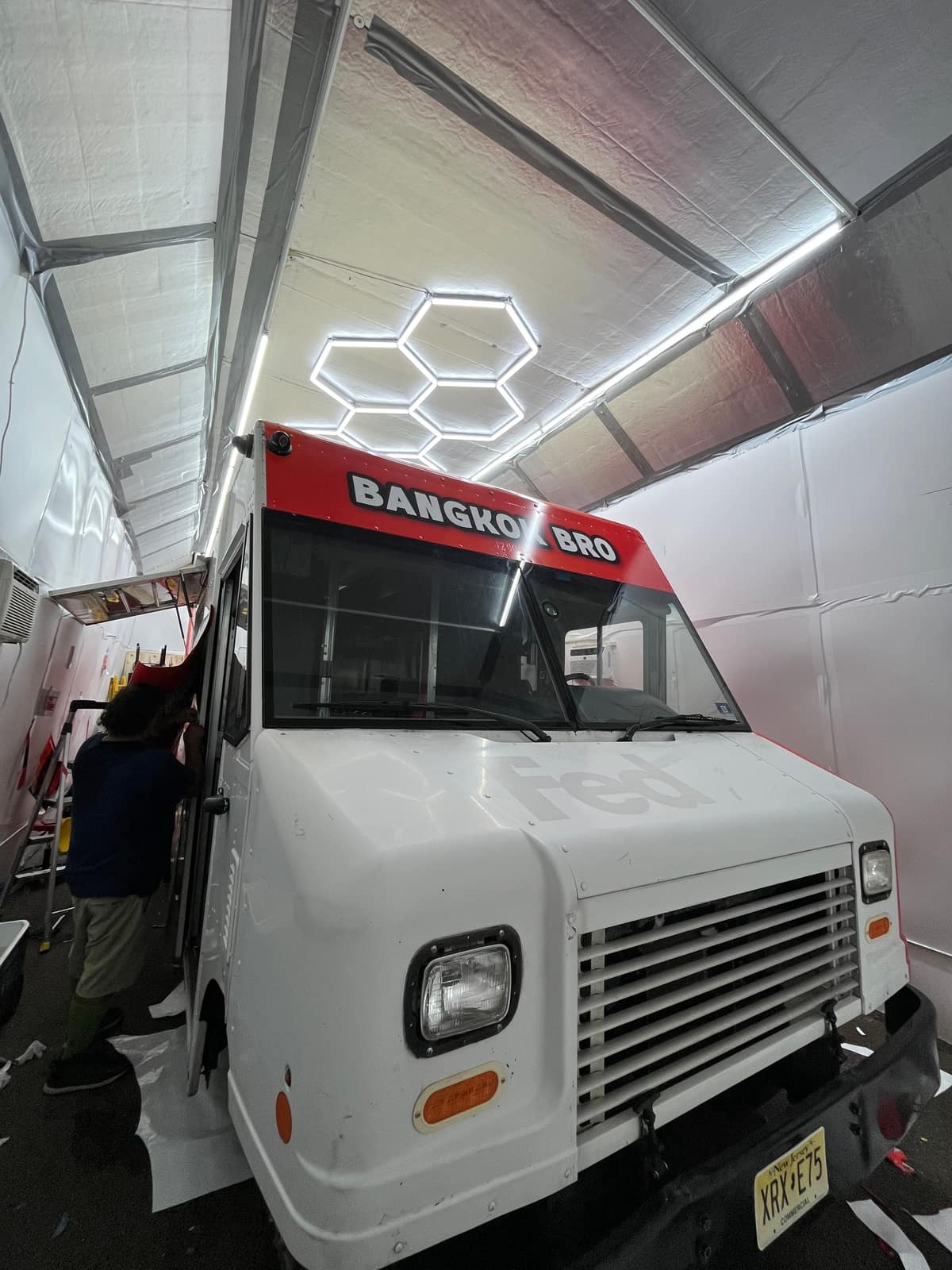
On most food trucks the box is wrapped fully and the front cab is left factory color. The box is where the window, the menu and the name are. The cab has the most complex curves and the most wear. When a custom body runs continuously from cab to box, a full wrap makes more sense, because a color break in the middle of a single panel looks like a mistake.
Step vans, carts and trailers
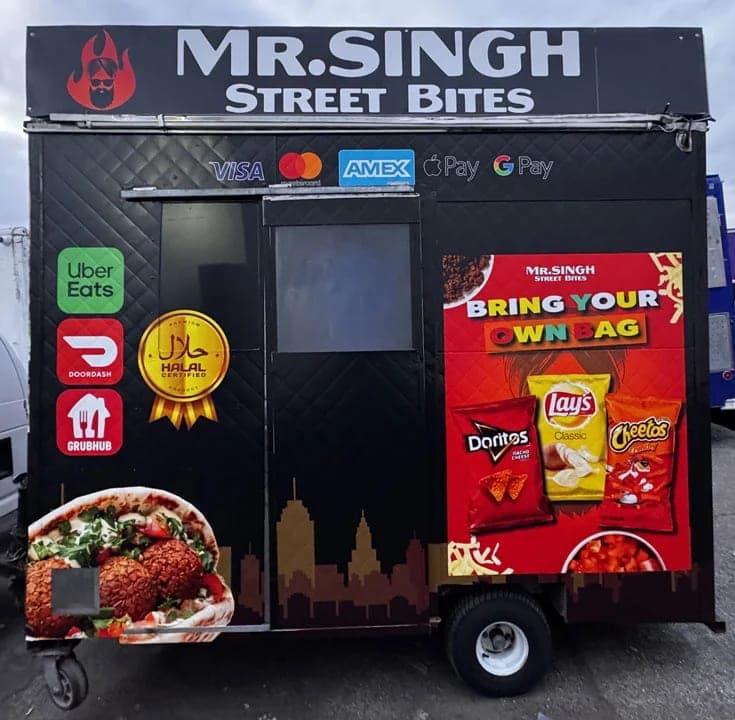
A step van is the most common food truck body in the city and the easiest to wrap: tall, mostly flat aluminum sides with rivet lines. A cart has more hardware per square foot, so the wrap is usually a set of printed panels rather than a continuous skin. A concession trailer has smooth sides and no cab, which suits a full wrap, but its tongue, fenders and rear door need their own treatment. The layout rules are the same on all three.
Durability around heat, grease and daily washing
A food truck is a harder environment for film than a delivery van. It sits in direct sun for a full shift, the window area gets grease on it every day, and the whole truck gets washed every night. We use cast vinyl with a UV laminate on every food truck, because unlaminated print will not survive the scrubbing.
- Edge sealing near the window and the generator exhaust, so grease and water cannot get under film that is wiped and heated daily.
- Margins around exhaust outlets. Film stops short rather than butting up to them.
- No pressure washers on edges. A nozzle aimed at a seam will lift it. Wash with a soft brush and a hose.
- Mild detergent on the wrapped surfaces. Solvent degreasers dull the laminate.
Templating a truck that has no template
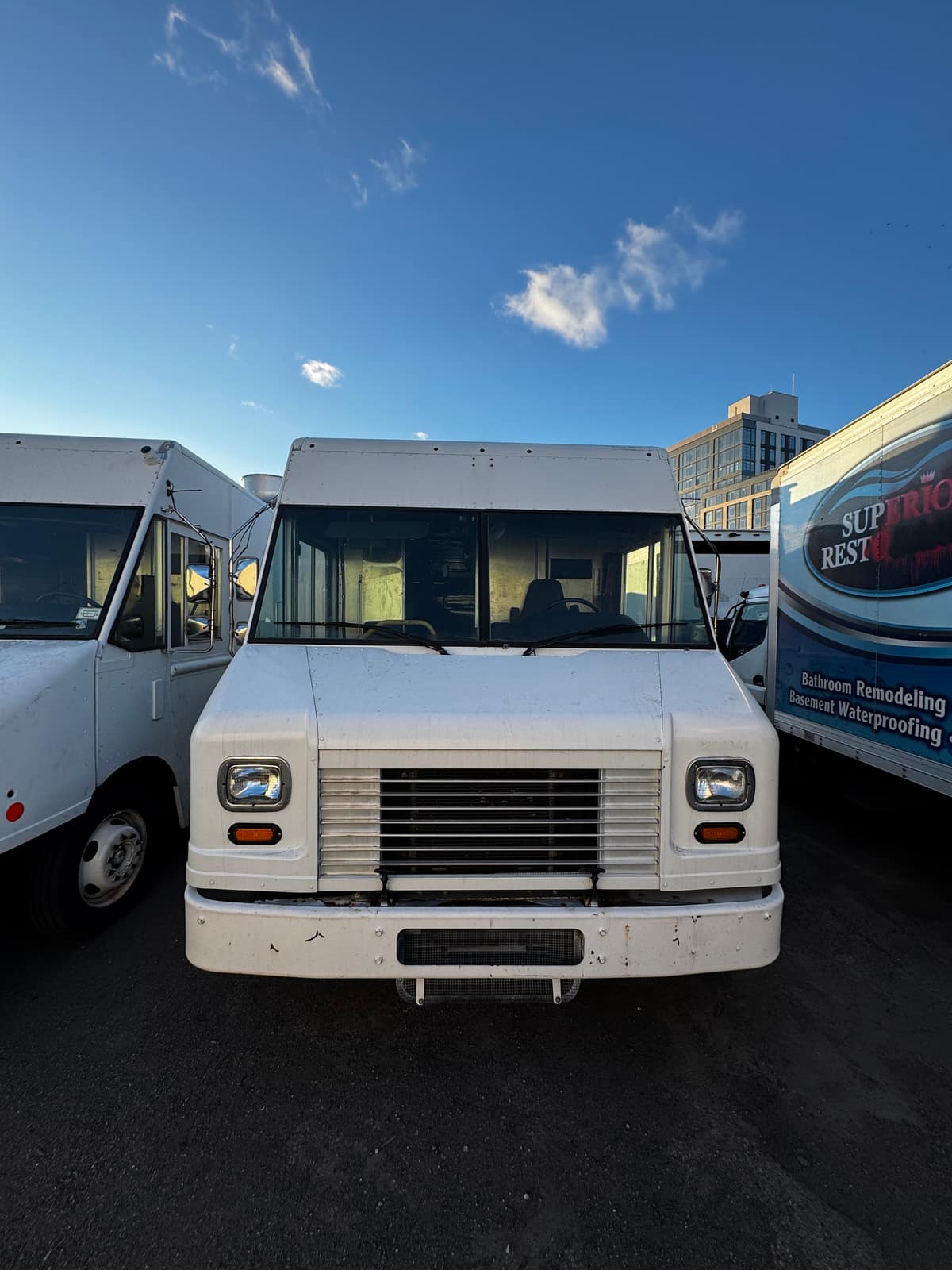
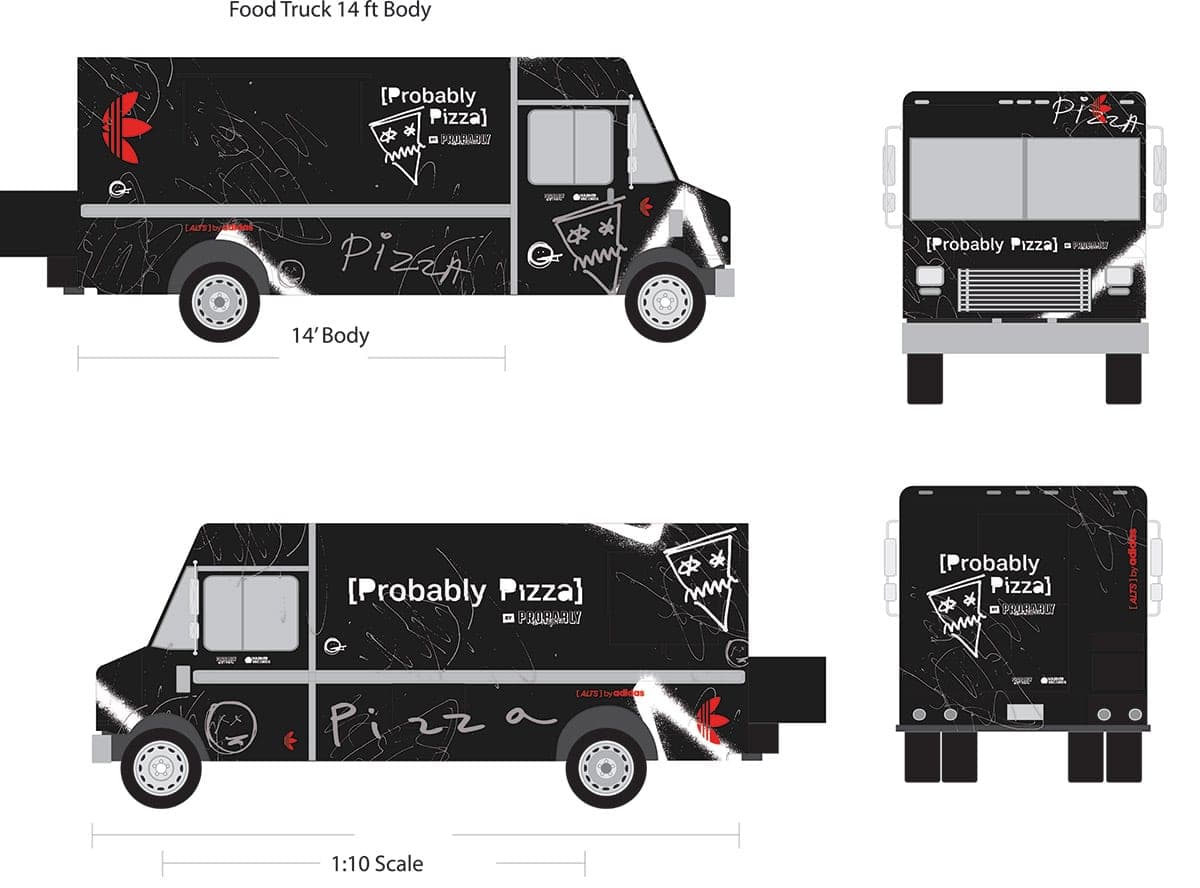
Wrap design normally starts from a manufacturer template, a scaled drawing of the exact model with every body line in place. Food trucks do not have one, because no two are built the same. So we build it ourselves: we photograph the unit square-on from every side, measure the box, the window, the door, every vent and every fixed piece of hardware, and draw the layout to those measurements. Guessing dimensions from phone photos is how a name ends up half behind an awning bracket.
Install time and taking the truck out of service
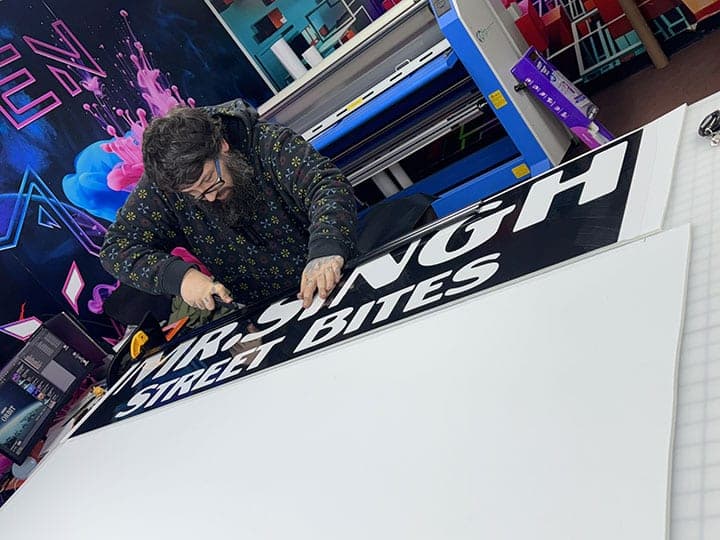
A food truck wrap is several days in the bay, not one. The truck has to arrive clean and degreased, which on a working kitchen means a real wash the night before. We usually strip old graphics on the first day, wrap the box on the second and third, and handle the cab, doors and details after that. Menu panels are made at the same time so they go on before the truck leaves. If you cannot lose the truck for that long, we can split the job across two visits, but we would rather do it once.
What to send us
- 1Photos of the truck from each side, the rear and the front, square-on in daylight, plus a close shot of the window area and any decals on the body.
- 2The body type: step van, box truck, custom build, cart or trailer, with make and year.
- 3Your logo as a vector file, your brand colors, and the name and cuisine line as you want them to read.
- 4The menu, split into items that will stay for the life of the wrap and items that change.
- 5Food photography at full resolution, or a note that you would rather go with illustration.
- 6Any notes from your inspector about what has to be visible and where.
- 7Where the truck parks, whether it serves at night, and when it can come off the road.
With that we can book the measuring visit and return a proof that already accounts for the window, the decals and the hardware.
Common questions
Can you wrap the serving window shutter?+
Usually yes, as its own piece so it can open and close without pulling on the surrounding film. Roll-up shutters that are too segmented to hold a graphic stay plain.
Do I need to remove my permit decals before the wrap?+
No. Tell us where they are mounted and we leave an unprinted area for them. If they sit on a section we are stripping, we will tell you before we start.
Can I print the prices into the wrap?+
You can, but we advise against it. Prices change more often than anything else on the truck, and a patched price never matches weathered film.
Will the wrap hold up to daily washing?+
With a UV laminate, sealed edges and the right cleaning method, yes. What shortens its life is a pressure washer on the seams and solvent degreaser on the laminate.
Do you wrap trucks at the commissary?+
We can measure and photograph there. For a full wrap we prefer our bay in Long Island City, because a food truck body has too many edges to do well in a parking lot.
Next step
Let's scope your project.
Send the vehicle list and artwork status; we'll come back with a scope and timeline.